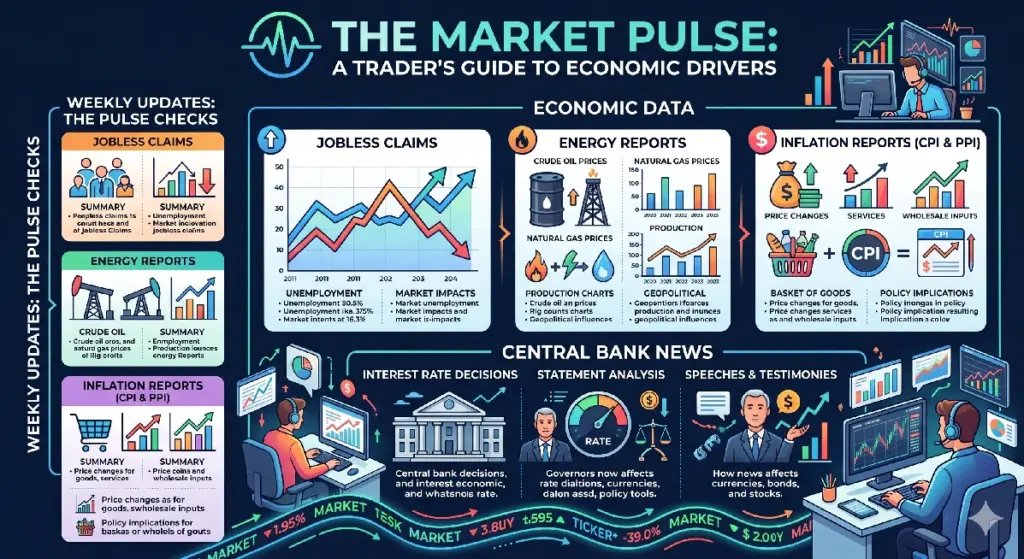
The Market Pulse: A Trader’s Guide to Economic Drivers
Do you ever wonder why the markets suddenly swing in either direction?
It all comes down to the “pulse” of the economy.
Global markets, including stocks and commodities, react instantly to economic data and central bank news.
Institutional traders watch these events closely to adjust their positions.
This constant shifting is exactly what creates the volatility you see on your charts.
Here is a simple guide to help you understand these market drivers.
1. Weekly Updates: The Pulse Checks
These reports happen every week. They act as quick health checks for the economy and often cause immediate, short-term price movements.
- Jobless Claims: Released every Thursday, this data shows the health of the labor market. If claims are low, the economy is usually strong.
- Energy Reports: Released every Wednesday, these track oil and gas inventories. If supply levels surprise the market, energy prices can swing sharply.
- Housing Data: These reports track mortgage applications. They help traders predict how confident consumers are feeling.
Learn More about
2. Monthly Updates: The Market Movers
Institutional investors watch these events most closely. These reports help define long-term trends and force central banks to make big policy decisions.
- Central Bank Meetings: This is the most important event. When banks change interest rates, it changes the tone for every asset class.
- Inflation Reports (CPI & PPI): These measure rising costs. When inflation is high, banks often keep interest rates high, which can cause stock prices to drop.
- Non-Farm Payrolls (NFP): This is the “big one” for jobs. Strong job growth is usually good for stocks, but it can also lead to fears of future interest rate hikes.
- PMI Readings: This survey tracks business activity. A score above 50 means the economy is growing, while below 50 means it is shrinking.
- Retail Sales: This tracks how much people are spending. Since spending drives the economy, strong numbers are generally great for the stock market.
3. Quarterly & Surprise Events: The Foundation
These events set the stage for the entire market environment over a longer period.
- GDP Reports: Released quarterly, this is the ultimate scoreboard for a nation’s economic output. It tells us if we are growing or heading toward a recession.
- Earnings Season: This is when companies report their profits. It creates major moves for individual stocks.
- OPEC+ Meetings: When oil-producing nations meet, they set production limits. This directly controls the price of energy.
- Geopolitical Events: Things like wars or trade sanctions are unpredictable. They act as “black swan” events that often drive investors toward safe assets like gold.
Quick Reference Table
| Frequency | Event Type | Primary Market Impacted |
| Weekly | Jobless Claims, Oil Inventories | Energy, Interest-rate sensitive stocks |
| Monthly | Inflation, Jobs, Interest Rates | Forex, Bonds, Broad Equities |
| Quarterly | GDP, Corporate Earnings | Individual stocks, Major Indices |
Pro-Tips for Your Trading Strategy
- Watch the Expectations: Use an economic calendar to see what analysts expect. The market usually reacts to the surprise factor. If a report matches expectations, the price might not move at all.
- The “Buy the Rumor” Effect: Sometimes the market prices in news before it happens. If a rate hike is already expected, the market might actually rally once the news is officially announced.
- Check the Treasury Yields: Keep an eye on the 10-Year Treasury Yield. When yields rise, money often leaves risky assets like crypto and growth stocks to go into “safer” government bonds.
Final Thoughts
Mastering these events won’t just make you a better trader; it will help you stay ahead of the crowd. By understanding why the market moves, you can stop guessing and start trading with more confidence.
Are you looking to integrate these specific economic events into an automated alert system, or would you prefer a strategy on how to trade the volatility surrounding these releases? Comment below!

Leave a Reply