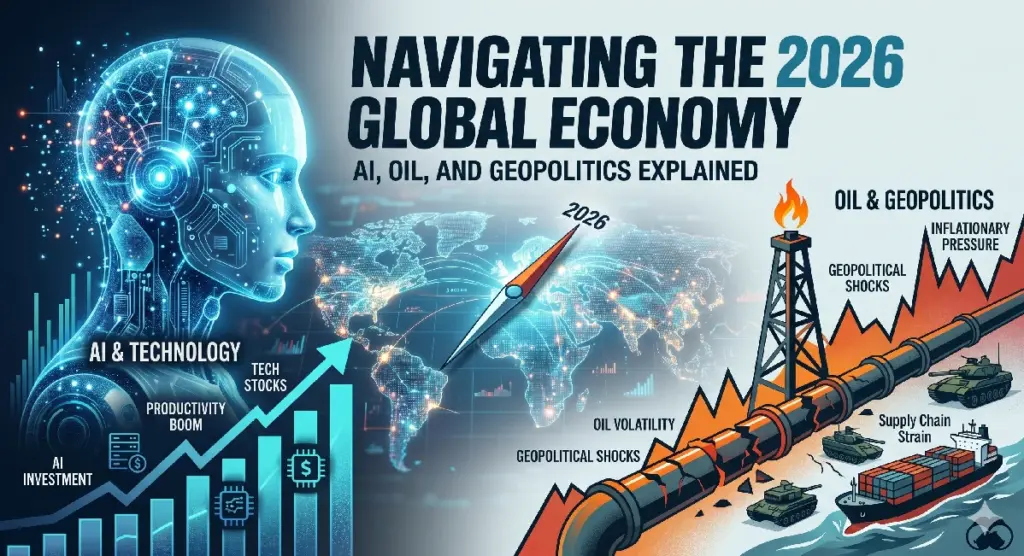
Navigating the 2026 Global Economy: AI, Oil, and Geopolitics Explained
Are you feeling a bit overwhelmed by the news lately?
Let’s dive in. As we move through the middle of 2026, the global economy is clearly at a crossroads.
You might be wondering why things feel so unstable.
The truth is, we are dealing with a complex mix of rapid technological change and global tension.
For Indian students and professionals looking to grow their wealth, understanding these big-picture forces—or macroeconomics—is vital.
Here’s how these factors are shaping our world today.
The Three Big Forces Driving the Markets
Simply put, three main forces are defining the economic landscape in 2026: Artificial Intelligence (AI), geopolitical tensions, and sticky inflation.
Let’s break it down.
1. The Artificial Intelligence Revolution
First, AI is no longer just a buzzword.
In fact, it is currently a massive economic driver. Major companies are pouring hundreds of billions into AI infrastructure.
This leads to a wave of spending on data centers, chips, and networks.
As a result, this investment acts as a “shock absorber” for the global economy.
Even when other sectors slow down, this tech spending keeps growth moving.
Most importantly, it is boosting productivity, which is the secret sauce for long-term health.
2. The Return of Geopolitical Risks
Next, we have to talk about geopolitics.
In other words, how global conflicts affect your wallet.
Unfortunately, the world is more divided than before.
Conflicts in the Middle East and tensions between major powers have brought uncertainty back to the front page.
Because of this, global supply chains are facing constant disruptions.
For example, when trade routes get blocked, the cost of moving goods shoots up.
On the flip side, this makes investors nervous, which explains why we are seeing so much “volatility,” or quick ups and downs in stock prices.
Explore this related post
Understanding Tokenization and Wholesale Digital Assets in 2026
3. The Tug-of-War with Inflation
Here’s the kicker: The world hoped inflation would drop quickly, but that hasn’t happened.
In short, events in 2026 have made inflation “sticky.”
Recent energy price shocks—driven largely by conflict—have pushed fuel and transport costs higher.
It’s essential to note that when energy is expensive, it acts like a hidden tax on every family and business.
Therefore, central banks must remain very patient and careful before lowering interest rates.
What This Means for You
You might be wondering, how does this show up in the markets?
Let’s explore the reality:
(1.) Stocks:
Major indexes are near historic highs.
This is largely because investors still believe in the profit power of big tech and AI.
That said, confidence is fragile.
Any bad headline about conflict or an oil price spike can cause a sharp reaction.
(2.) The Oil Factor:
Keep in mind that oil is the main “swing factor” right now.
If the situation in the Middle East cools down, oil prices should stabilize, which would be great for inflation.
Alternatively, if the conflict drags on, energy costs will stay high, making it harder for the economy to breathe.
(3.) Regional Differences:
The U.S. is showing strength due to its AI lead.
However, Europe is struggling with high defense spending and energy costs.
Meanwhile, emerging markets are having a “mixed” year; some are winning through tech exports, while others are battling high debt.
Looking Ahead: Your Actionable Checklist
As we head into the second half of 2026, here’s your complete checklist of things to watch:
- Central Bank Decisions: Watch the U.S. Federal Reserve. If they keep rates steady, they are still worried about inflation. If they begin to cut rates, it signals confidence.
- The “AI Payoff”: It’s worth noting that we are still in the building phase. The next big question is: when will this translate into daily profits for regular businesses?
- Trade Relations: Keep an eye on how countries are changing trade partners to become more self-reliant. This “rewiring” of global trade will decide who wins or loses in the coming years.
Discover how
Bottom Line
The global economy is currently in a major period of transition. We are moving from an era of easy growth into a more high-tech and energy-sensitive world.
Pro tip: The best approach in times like this is to stay informed and keep your portfolio balanced.
Diversification—not putting all your eggs in one basket—is your best defense against uncertainty.
Finally, while headlines may sound intense, remember that technological progress like AI provides a strong, long-term foundation.
By monitoring the flow of money into tech and staying alert to energy prices, you can navigate this complex market.
The path forward might be bumpy, but for those who stay patient and focused, there are still plenty of opportunities ahead.
Disclaimer: This post is for educational purposes only and does not constitute financial advice. Always consult with a professional advisor before making investment decisions.
What aspect of these global economic trends—AI, geopolitics, or inflation—do you think will have the biggest impact on your own financial planning for the rest of 2026? Let us know in the comments below!

Leave a Reply