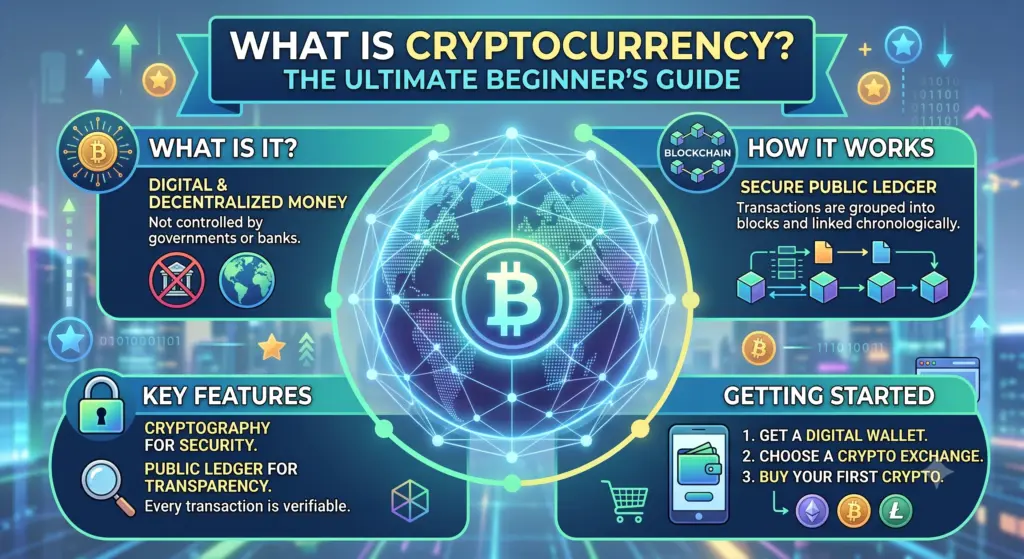
What Is Cryptocurrency? The Ultimate Beginner’s Guide 🚀
Key Takeaways:–
- Decentralized Nature: Cryptocurrencies operate without a central bank or government, putting you in direct control of your digital assets.
- Blockchain Powered: Every transaction is permanently recorded on a secure, transparent, public ledger known as blockchain technology.
- Global & Borderless: You can send value across the world instantly, avoiding the heavy fees and delays of the traditional banking system.
- Diverse Ecosystem: From Bitcoin (digital gold) to Ethereum (smart contracts) and emerging Real World Asset (RWA) tokens in 2026, the crypto market offers various utilities.
- High Risk, High Reward: While offering incredible investment opportunities, the market is known for high volatility and requires strict security practices.
Power Your AI-Driven Crypto Strategies
In 2026, artificial intelligence is completely transforming how we approach cryptocurrency futures trading. From algorithmic execution to predictive technical analysis, maintaining a competitive edge requires the right infrastructure. Binance offers the deep liquidity, rock-bottom fees, and advanced API connectivity necessary to seamlessly run your automated systems.
ZenvestAI Quick Read
Cryptocurrency is a decentralized, digital form of money secured by cryptography and hosted on a distributed ledger called a blockchain.
Unlike fiat currency controlled by governments, crypto enables borderless, peer-to-peer transactions.
As of 2026, it has evolved beyond simple digital cash into a massive ecosystem encompassing decentralized finance (DeFi), smart contracts, and institutional assets like Bitcoin ETFs.
It solves the friction of traditional banking but introduces new responsibilities regarding personal security and market volatility.
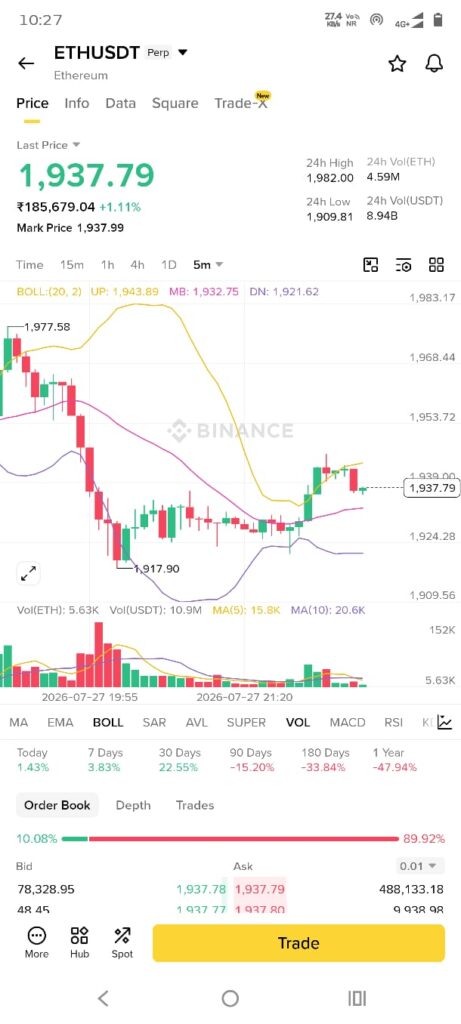
Welcome, crypto enthusiasts! 👋 Welcome to ZenvestAI.com—I’m genuinely excited to have you here because cryptocurrency and blockchain are subjects I’m deeply passionate about.
Understanding your money is the first step toward financial freedom. Over the last 8–10 years, the words “blockchain” and “cryptocurrency” have gone from being unfamiliar tech jargon to global buzzwords.
Today, almost every Gen Z internet user has heard about Bitcoin, Ethereum, or crypto in some form.
But have you ever wondered what cryptocurrency actually is, how it works, and why millions of people, businesses, and even governments are paying attention?
Having managed daily operations and customer frustrations as a former bank manager, I’ve seen firsthand the friction, delays, and limitations inherent in the traditional financial system.
Think about traditional (fiat) money for a moment. It works well within national borders, but it comes with limitations.
If you’ve ever traveled abroad, you know the hassle of exchanging currencies, paying conversion fees, and dealing with banking restrictions. Sending money across countries can also be slow and expensive.
Cryptocurrency was created to solve many of these challenges. It is a borderless digital currency that allows people to transfer value directly over the internet—without relying on traditional banking systems.
Whether you’re sending money across the street or across the world, crypto follows the same network, making global transactions faster, more accessible, and available 24/7.
Secure Your Crypto
“Not your keys, not your coins.” Take total control of your digital wealth and protect against exchange hacks with a Ledger hardware wallet.
Shop Ledger NowSince diving into the fast-paced world of crypto futures trading back in 2018, I have watched this technology mature from a speculative experiment into a legitimate, institutional asset class.
That’s why cryptocurrency isn’t just another financial trend—it’s one of the biggest technological innovations of the digital age.
Whether you’re a complete beginner or simply curious about the crypto revolution, this guide will explain everything in simple, easy-to-understand language.
Let’s dive in and discover why cryptocurrency is changing the future of money.
What This Post Covers
- The Definition of Cryptocurrency and Blockchain.
- The historical evolution of digital money up to 2026.
- Different types of tokens, including utility, AI, and meme coins.
- Direct comparisons between crypto, fiat, stocks, and gold.
- A step-by-step guide on how to buy, store, and secure your digital assets.
- Common scams to avoid and essential beginner investing tips.
AI-Powered Execution
Deploy your 2026 algorithmic and AI trading models on the exchange built for speed. Get industry-leading liquidity, ultra-low fees, and seamless API connectivity.
What Is Cryptocurrency?
Cryptocurrency is a digital or virtual form of currency or Money. It is secured by advanced mathematical cryptography that is known as Blockchain. The advanced mathematical cryptography makes cryptocurrency impossible to counterfeit. The cryptocurrency exist entirely as data entries on a massive, distributed database.
The Original Crypto Wallet
Never compromise on security. Safeguard your Bitcoin and digital assets with Trezor—the trusted, fully open-source hardware wallet for true peace of mind.
Get Your TrezorWhy don’t governments fully control most cryptocurrencies?
Quick Insight: 💡 Most cryptocurrencies are decentralized, meaning they are governed by a distributed network of computers (nodes) rather than a central authority like a reserve bank. This prevents any single government from printing more supply, freezing accounts arbitrarily, or manipulating the ledger.
Key features include:
- Digital: Exists solely on computers and mobile devices.
- Decentralized: No central CEO, bank, or government manages the network.
- Borderless: Accessible to anyone with an internet connection.
- Secure: Protected by complex cryptographic algorithms.
- Transparent: Every transaction is verifiable by the public.
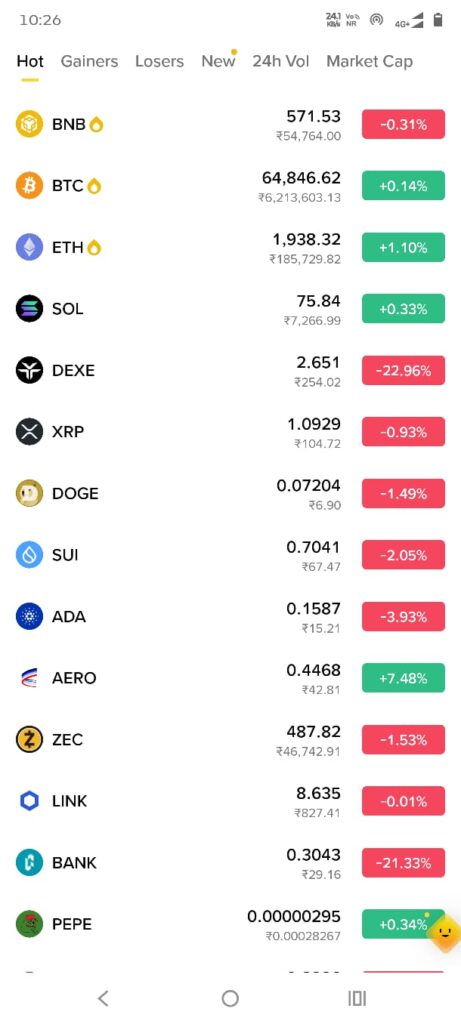
How Does Cryptocurrency Work?
The mechanics behind this digital money rely on an entirely new way of organizing data. To begin with, traditional banks use a private, centralized ledger to track who owns what. Cryptocurrency, however, uses a decentralized system.
Read It
Why the Binance Virtual Card is the Smartest Way to Spend Crypto in Asia (2026 Guide)
Blockchain Technology
Blockchain is the foundational database engine that makes digital currency possible. Imagine a digital spreadsheet duplicated thousands of times across a network of computers, designed to regularly update itself automatically.
- Blocks and Chains: Transactions are grouped together into “blocks.” Once a block is full, it is permanently linked (or chained) to the previous block using cryptographic hashes.
- Public Ledger: Because this chain is duplicated across thousands of computers globally, anyone can view the ledger, ensuring total transparency.
AI-Powered Execution
Deploy your 2026 algorithmic and AI trading models on the exchange built for speed. Get industry-leading liquidity, ultra-low fees, and seamless API connectivity.
Transactions
Sending and receiving crypto is remarkably straightforward once you understand the flow.
- Sending crypto: You use your private digital key to authorize a transfer of value to another person’s public address.
- Receiving crypto: The network verifies the sender has the funds, and the amount appears in your wallet balance.
- Transaction verification: Network participants (miners or validators) check the ledger history to confirm the transaction is legitimate before adding it to the blockchain.
Consensus Mechanisms
Since there is no central bank to approve transactions, the network must agree on what is true. This agreement is known as a consensus mechanism.
- Proof of Work (PoW): Used by Bitcoin, this requires high-powered computers to solve complex math puzzles to validate transactions.
- Proof of Stake (PoS): Used by Ethereum and Solana, this requires users to “stake” or lock up their own coins as collateral to validate transactions, which is vastly more energy-efficient.
History of Cryptocurrency
The journey of digital cash is a fascinating timeline of cryptography and economics. Understanding this history gives us vital context for why the market behaves the way it does today.
- 1980s Digital Cash Concepts: Early computer scientists attempted to create e-cash, but struggled with the “double-spending” problem without using a central server.
- 2008 Bitcoin Whitepaper: The pseudonymous Satoshi Nakamoto published the blueprint for a peer-to-peer electronic cash system.
- 2009 Bitcoin Launch: The very first block (the Genesis Block) was mined, officially launching the Bitcoin network.
- 2015 Ethereum: Vitalik Buterin launched Ethereum, introducing smart contracts—programmable code that runs on the blockchain.
- 2020 DeFi Boom: Decentralized Finance exploded, allowing users to lend, borrow, and trade without traditional banks.
- 2021 NFT Growth: Non-Fungible Tokens brought digital ownership to art, gaming, and real estate.
- 2024 Bitcoin ETF Developments: Wall Street fully embraced crypto, launching Spot ETFs that brought massive institutional capital into the market.
- 2025–2026 Institutional Adoption & AI + Crypto Integration: We are currently seeing a massive Synergy between Artificial Intelligence agents and blockchain networks, executing autonomous trades and managing data via AI tokens.
Types of Cryptocurrencies
Not all digital assets serve the same purpose in the modern Web3 ecosystem. Just as the traditional financial market has different sectors, crypto has distinct categories.
Bitcoin (BTC)
Bitcoin is widely considered the pioneer and the most secure network in existence. Because its supply is strictly capped at 21 million coins. It functions as a highly effective store of value, earning it the nickname “digital gold.”
Ethereum (ETH)
Ethereum acts as the foundational operating system for the decentralized web. It pioneered smart contracts, allowing developers to build decentralized applications (dApps) directly on top of its blockchain.
Stablecoins
Volatility is a known issue, which is exactly why stablecoins were invented. These tokens are pegged 1:1 to a stable asset like the US Dollar (e.g., USDT, USDC, DAI), providing the speed of crypto without the wild price fluctuations.
Meme Coins
Originating as internet jokes, these coins rely heavily on community hype. While tokens like Dogecoin and Shiba Inu have generated massive returns, they generally lack intrinsic utility and carry extreme risk.
Utility Tokens
These tokens give users access to a specific product or service on a blockchain. For instance, Filecoin allows users to purchase decentralized cloud storage.
Governance Tokens
Owning these tokens gives you voting rights in a decentralized autonomous organization (DAO), allowing you to shape the future of a specific crypto project.
Privacy Coins
Networks like Monero and Zcash use advanced cryptography to completely obscure transaction details, offering total financial anonymity.
AI Tokens
A massive trend in 2026, AI tokens power decentralized artificial intelligence platforms, rewarding users for providing data or computing power for machine learning models.
Real World Asset (RWA) Tokens
These tokens represent digital ownership of physical assets like real estate, fine art, or treasury bills, bringing traditional finance directly onto the blockchain.
Binance “bStocks”
bStocks are a new cryptocurrency product launched by the crypto exchange Binance.
- What they are: bStocks are “tokenized securities.” They are BEP-20 crypto tokens built on the BNB Smart Chain that represent real shares of traditional U.S. companies.
- How it works: Each bStock token is backed 1:1 by a real share of a company held by a regulated custodian.
- Available assets: Binance has started turning major U.S. stocks into bStocks, including Tesla (TSLAB), Nvidia (NVDAB), Coinbase (COINB), and SpaceX.
- The benefit: Because they are crypto tokens, investors can buy fractional shares for as little as $5, trade them 24/7 (unlike the traditional stock market that closes on weekends and evenings), and hold them in personal crypto wallets.
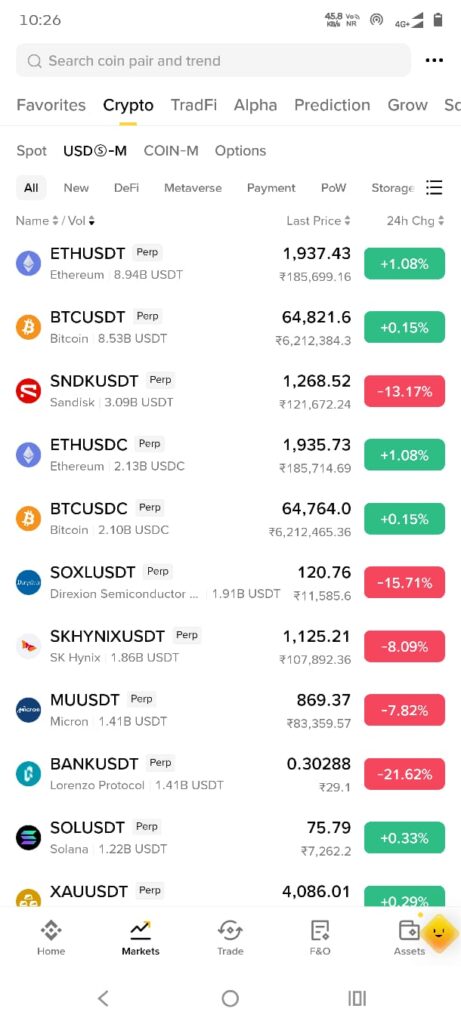
Top 15 Most Popular Cryptocurrencies in 2026
When scanning the current market, these are the heavyweights driving the industry forward.
| Name | Ticker | Primary Purpose & Use Case | Ecosystem Focus |
| Bitcoin | BTC | Store of value, digital gold | Settlement network |
| Ethereum | ETH | Smart contracts, dApps, DeFi | Web3 foundation |
| Solana | SOL | High-speed, low-cost dApps | Gaming, DeFi, NFTs |
| XRP | XRP | Cross-border institutional payments | Banking Synergy |
| BNB | BNB | Binance exchange utility | BSC network |
| Cardano | ADA | Peer-reviewed smart contracts | Sustainable Web3 |
| Avalanche | AVAX | Enterprise blockchain scaling | Institutional finance |
| Chainlink | LINK | Decentralized oracle networks | Connecting data to chains |
| Sui | SUI | Object-centric high-speed chain | Gaming and digital commerce |
| Toncoin | TON | Telegram integration | Social Web3 |
| Hyperliquid | HYPE | Decentralized perpetuals exchange | Advanced crypto futures trading |
| Tron | TRX | Decentralized content sharing | Heavy stablecoin transfer |
| Hedera | HBAR | Enterprise-grade hashgraph | Corporate supply chains |
| Aptos | APT | High-throughput safe smart contracts | Global transaction settlement |
| Stellar | XLM | Unbanked cross-border payments | Financial inclusion |
Explore It
Cryptocurrency vs Traditional Money
Comparing digital assets to the fiat money in your pocket helps clarify their unique advantages.
| Feature | Cryptocurrency | Traditional Money (Fiat) |
| Control | Decentralized (No central authority) | Centralized (Governments/Banks) |
| Supply | Often mathematically capped (e.g., BTC) | Unlimited (Governments print more) |
| Speed | Instant to minutes, globally | Days for international wires |
| Fees | Variable, often very low for global transfer | High cross-border fees |
| Transparency | Fully public ledger | Private banking databases |
| Privacy | Pseudonymous (wallet addresses) | Tied to strict KYC identities |
| Inflation | Varies (BTC is deflationary) | High risk of inflation |
| Global Access | Open to anyone with the internet | Requires bank approval/infrastructure |
| Availability | 24/7/365 | Bank business hours |
| Security | Cryptography & self-custody | FDIC/Government insurance |
Cryptocurrency vs Stocks vs Gold vs Mutual Funds
Diversification is key to any portfolio. Here is how crypto stacks up against traditional investment vehicles.
| Asset Class | Returns (Potential) | Risk Level | Liquidity | Ownership | Volatility | Inflation Protection | Accessibility |
| Cryptocurrency | Extremely High | Very High | 24/7, Very High | Direct (Self-custody) | Extreme | High (Bitcoin) | Global, Instant |
| Stocks | Moderate to High | Moderate | Market hours only | Broker holds custody | Moderate | Moderate | Requires broker |
| Gold | Low to Moderate | Low | Moderate (Physical) | Direct or Paper | Low | High | Easy (Jewelry/ETFs) |
| Mutual Funds | Moderate | Low to Mod | End of trading day | Fund manager controlled | Low | Moderate | Requires broker |
Advantages of Cryptocurrency
The benefits of utilizing blockchain networks extend far beyond simple price speculation.
- Fast global transfers: You can send capital to a vendor in another hemisphere in seconds.
- Lower transaction fees: Bypassing intermediary correspondent banks significantly reduces costs.
- Financial freedom: You act as your own bank, giving you ultimate control over your assets.
- Transparency: Every transaction is permanently recorded and publicly verifiable.
- Investment opportunities: Early adoption of emerging Web3 networks can yield high returns.
- Inflation hedge: Assets with a fixed supply protect purchasing power over time.
- 24/7 markets: Unlike the stock market, crypto never sleeps.
- Innovation in Web3: From AI integrations to decentralized social media, the tech is rapidly evolving.
Risks of Cryptocurrency
However, it is crucial to understand that being your own bank comes with significant responsibilities.
- High volatility: Prices can swing 200% in a single day, leading to emotional trading mistakes.
- Scams: Phishing links and malicious contracts prey on uneducated users.
- Rug pulls: Developers sometimes abandon a new project and steal investor funds.
- Hacks: Poorly coded smart contracts or centralized exchanges can be breached.
- Wallet loss: Losing your private key means losing your money forever.
- Regulations: Sudden changes in government policy can impact market stability.
- Tax obligations: Tracking trades across multiple chains can make tax reporting complex.
- Emotional trading: The fast-paced market easily triggers Fear of Missing Out (FOMO).
What Is Blockchain?
The easiest way to understand blockchain is to think of it as a shared, unchangeable digital receipt book.
How do smart contracts fit into the blockchain?
Quick Insight: 💡 Smart contracts are self-executing programs stored directly on the blockchain. When specific conditions are met, the code runs automatically—like a digital vending machine. This eliminates the need for middlemen in legal agreements, trading, and lending.
- Blockchain in simple language: A decentralized database distributed across many computers.
- Public ledger: Everyone can see the receipts, but no one can alter past entries.
- Decentralization: No single entity controls the data flow.
- Immutability: Once data is written to a block, it is practically impossible to change or delete.
An Easy Analogy: Imagine a group of 100 strangers playing a board game. Instead of one person keeping the score on a piece of paper, all 100 people have their own identical piece of paper. Every time someone scores a point, they announce it, and all 100 people update their paper simultaneously. If one person tries to cheat and change a score, the other 99 will instantly notice the discrepancy and reject it. That is blockchain.
What Is a Crypto Wallet?
To interact with the blockchain, you need a specialized tool to hold your digital credentials.
Hot Wallets
Hot wallets are software-based and constantly connected to the internet.
- Mobile: Apps like Trust Wallet on your smartphone.
- Browser: Extensions like MetaMask for interacting with Web3 sites.
- Desktop: Applications downloaded directly to your PC.
Cold Wallets
Cold wallets are physical devices that keep your security keys entirely offline, making them immune to online hacking.
- Hardware wallets: Devices that look like USB drives (e.g., Ledger, Trezor).
- Paper wallets: (Historical context) Simply printing your keys on physical paper.
Secure Your Crypto
“Not your keys, not your coins.” Take total control of your digital wealth and protect against exchange hacks with a Ledger hardware wallet.
Shop Ledger NowThe Original Crypto Wallet
Never compromise on security. Safeguard your Bitcoin and digital assets with Trezor—the trusted, fully open-source hardware wallet for true peace of mind.
Get Your TrezorKey Concepts to Understand
- Public Key: Think of this as your bank account number. You share this to receive funds.
- Private Key: Think of this as your ATM PIN. Never share this with anyone.
- Seed Phrase: A master password of 12-24 random words that can recover all your private keys. If you lose this, your funds are gone.
How to Buy Cryptocurrency (Step-by-Step) ✅
Getting started is much easier today than it was a few years ago. Just follow these steps to secure your first digital assets.
- Step 1: Choose a trusted exchange. Select a reputable platform like Binance, Coinbase, or WazirX (depending on your region).
- Step 2: Create an account. Sign up with a secure email and strong password.
- Step 3: Complete identity verification (KYC). Upload your ID to comply with government anti-money laundering laws.
- Step 4: Deposit funds. Transfer local fiat currency via bank transfer, UPI, or card.
- Step 5: Choose a cryptocurrency. Search for the token you want (e.g., BTC or ETH).
- Step 6: Place your order. Execute a market buy for immediate purchase.
- Step 7: Store it securely. Move your crypto off the exchange and into your personal cold or hot wallet.
AI-Powered Execution
Deploy your 2026 algorithmic and AI trading models on the exchange built for speed. Get industry-leading liquidity, ultra-low fees, and seamless API connectivity.
Where Can You Use Cryptocurrency?
Digital currency has evolved far beyond a speculative trading asset.
- Online shopping: Major retailers now accept crypto via payment gateways.
- International transfers: Ideal for remittances back home with minimal fees.
- Freelancing: Getting paid instantly in stablecoins regardless of client location.
- Gaming: Owning in-game assets directly via NFTs.
- Travel: Booking flights and hotels through crypto-native travel agencies.
- Investments: Earning yield in decentralized finance (DeFi) protocols.
- Web3 applications: Accessing decentralized social media and computing platforms.
Is Cryptocurrency Legal?
The regulatory landscape varies drastically depending on your geographical location.
How is crypto regulated globally in 2026?
Quick Insight: 💡 Regulation is fragmented. Regions like the UAE and Singapore have established clear, pro-crypto frameworks to attract businesses. The U.S. now heavily integrates crypto through institutional ETFs, while the European Union enforces the comprehensive MiCA framework.
- India’s regulatory approach: In India, crypto is completely legal to hold and trade, though it faces a stringent 30% tax on profits and a 1% TDS on transactions. The government focuses on bringing exchanges under anti-money laundering compliance.
- U.S.: Highly regulated, with ongoing battles between the SEC and specific altcoins, though Bitcoin and Ethereum are firmly established.
- UAE & Singapore: Both act as major global hubs with very clear, business-friendly tax and legal guidelines.
Is Cryptocurrency Safe?
Safety in this ecosystem entirely depends on your personal security habits.
- Security: The blockchain itself (like Bitcoin) has never been successfully hacked.
- Risks: The vulnerabilities lie in third-party exchanges and user error.
- Best practices: Always use a hardware wallet for large amounts, enable two-factor authentication (2FA) on all accounts, and never click suspicious links.
- Common mistakes: Sending tokens to the wrong network address (e.g., sending ETH to a BTC address) results in permanent loss.
Common Cryptocurrency Scams
Because transactions are irreversible, scammers heavily target this industry.
- Fake giveaways: Scammers impersonate celebrities promising to “double your crypto” if you send them funds first.
- Phishing: Fake websites designed to steal your seed phrase.
- Ponzi schemes: Platforms promising guaranteed high daily returns.
- Pump-and-dump groups: Manipulating low-liquidity coins to trap beginner investors.
- Fake investment apps: Apps that look legitimate but prevent you from withdrawing funds.
- AI deepfake scams: Using artificial intelligence to create fake endorsement videos from trusted figures.
Real Story: How a Hyderabad Techie Lost ₹78 Lakhs in a Romance Crypto Scam
A Hyderabad software engineer met a woman on a matrimonial website. They chatted for weeks, built trust, and even discussed their future together. Only after gaining his confidence did she introduce him to a “safe” cryptocurrency investment.
She encouraged him to start with just ₹10,000. The fake trading app showed impressive profits, and he was even able to withdraw a small amount. Believing everything was genuine, he invested more and more—eventually losing ₹78 lakhs.
When he tried to withdraw the full amount, the platform demanded huge “taxes” and “processing fees.” Soon after, the woman disappeared, the website went offline, and the money was gone.
The lesson is simple: Never mix romance with investment advice. If someone you meet online asks you to invest in cryptocurrency or promises guaranteed profits, treat it as a major red flag and walk away.
Cryptocurrency Investing Tips for Beginners
Before allocating capital, establish a solid foundation of discipline.
- Start small: Only risk capital you can afford to lose.
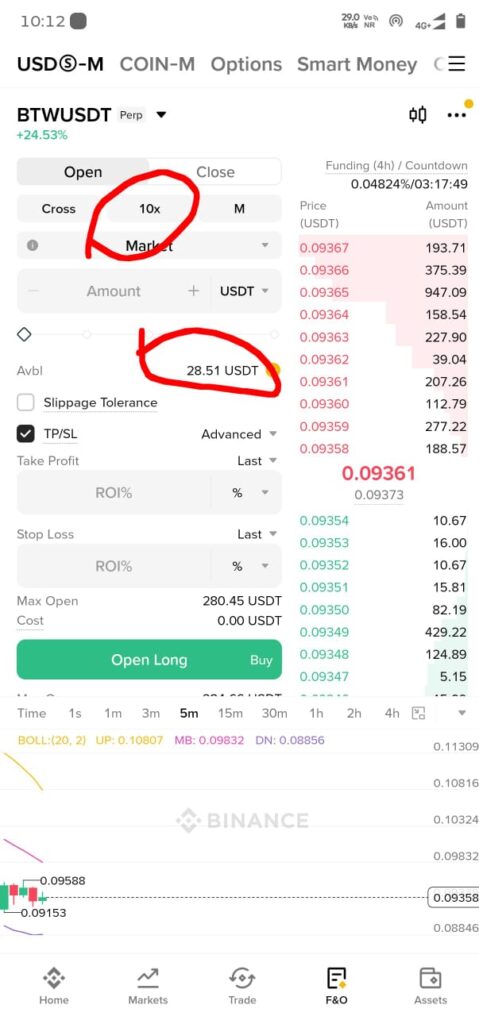
- Diversify: Don’t put all your money into a single volatile meme coin.
- Learn before investing: Understand the technology behind the token you are buying.
- Avoid FOMO: Chasing massive green candles usually leads to buying at the top.
- Use secure wallets: Move long-term holdings off centralized exchanges.
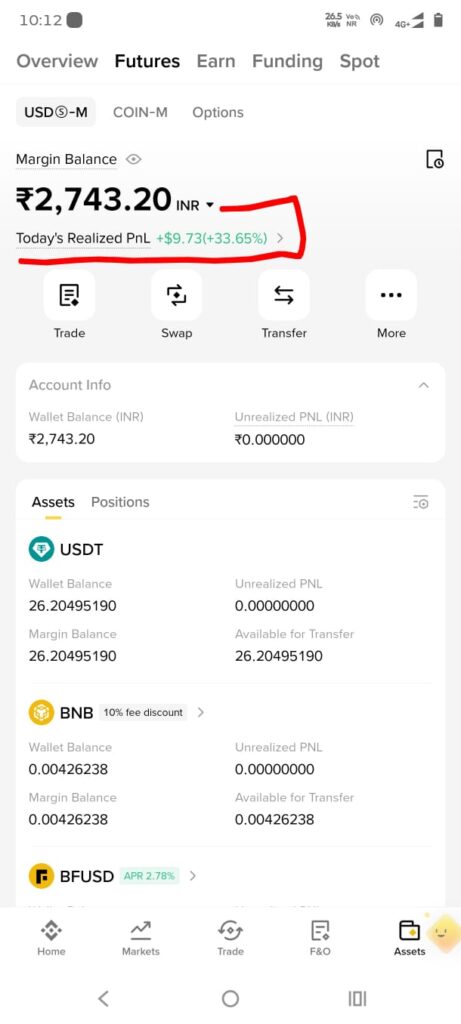
- Think long term: Surviving multiple market cycles often yields better Outcomes than day trading.
AI-Powered Execution
Deploy your 2026 algorithmic and AI trading models on the exchange built for speed. Get industry-leading liquidity, ultra-low fees, and seamless API connectivity.
Cryptocurrency Terms Every Beginner Should Know
Navigating the crypto space requires learning a new vocabulary.
| Term | Definition |
| Blockchain | The decentralized public ledger where transactions are recorded. |
| Wallet | Software or hardware used to manage your private keys. |
| Token | A digital asset built on top of an existing blockchain (e.g., ERC-20). |
| Coin | A digital asset that operates on its own native blockchain (e.g., BTC). |
| Altcoin | Any cryptocurrency that is not Bitcoin. |
| Stablecoin | A token pegged to a fiat currency to maintain a stable value. |
| Gas Fee | The transaction fee paid to the network to process an operation. |
| Mining | The PoW process of verifying transactions using computer power. |
| Staking | The PoS process of locking up coins to secure the network and earn rewards. |
| DeFi | Decentralized Finance; banking services without traditional banks. |
| NFT | Non-Fungible Token; a unique digital asset representing ownership. |
| DAO | Decentralized Autonomous Organization; community-governed projects. |
| Layer 1 | The base blockchain network (e.g., Ethereum, Solana). |
| Layer 2 | A scaling network built on top of a Layer 1 to reduce fees and increase speed. |
| Smart Contract | Self-executing code that automates agreements on the blockchain. |
| Market Cap | The total value of a cryptocurrency (Current Price x Circulating Supply). |
| Liquidity | How easily an asset can be bought or sold without affecting its price. |
| HODL | Crypto slang for holding onto your assets long-term despite volatility. |
| Bull Market | A market condition where prices are trending upward. |
| Bear Market | A market condition where prices are trending downward. |
Secure Your Crypto
“Not your keys, not your coins.” Take total control of your digital wealth and protect against exchange hacks with a Ledger hardware wallet.
Shop Ledger NowFrequently Asked Questions (FAQ)
What is cryptocurrency in simple words?
Quick Insight: 💡 Cryptocurrency is a type of digital money that exists only on computers. It is decentralized, meaning no bank or government controls it, and it uses complex math to keep your money and transactions incredibly secure.
Is cryptocurrency real money?
Yes and no. While it doesn’t exist as physical paper, you can use it to buy goods, transfer wealth, and pay for services globally, making it a highly functional digital currency.
Can beginners invest in cryptocurrency?
Absolutely. Modern exchanges are incredibly user-friendly. However, beginners should always start by educating themselves and investing very small amounts to understand market volatility first.
How much money do I need to start?
You can start with as little as $10 or ₹1,000 on most major exchanges. You do not have to buy a whole Bitcoin; you can buy a tiny fraction of one.
Is Bitcoin the same as cryptocurrency?
Bitcoin is the first and most famous cryptocurrency, but it is just one of thousands. Think of it like a brand: Kleenex is a tissue, but not all tissues are Kleenex.
Can cryptocurrency be hacked?
The major blockchains themselves are mathematically secure and have never been breached. However, your personal wallet or a centralized exchange can be hacked if you practice poor digital hygiene.
The Original Crypto Wallet
Never compromise on security. Safeguard your Bitcoin and digital assets with Trezor—the trusted, fully open-source hardware wallet for true peace of mind.
Get Your TrezorIs cryptocurrency taxable?
Quick Insight: 💡 In most major economies, yes. The IRS (USA) and the Income Tax Department (India) classify crypto as a taxable asset. You must report capital gains, losses, and any income earned from staking or mining.
Which cryptocurrency is best for beginners?
Bitcoin (BTC) and Ethereum (ETH) are widely considered the safest starting points due to their massive market capitalization, proven history, and institutional backing.
Can I lose all my money in crypto?
Yes. If you invest in fraudulent tokens, fall victim to a phishing scam, lose your private seed phrase, or panic sell during a steep market crash, you can lose your entire investment.
The Bottom Line
In summary, cryptocurrency is far more than just a speculative trading vehicle; it is a fundamental rewiring of the global financial system. It offers a decentralized, borderless, and highly efficient alternative to traditional fiat banking.
While the rewards and technological Synergy are immense, the responsibility for securing your digital assets rests entirely on your shoulders. Education, patience, and rigorous security practices are your best tools in this evolving landscape.
I’d love to hear from you! What is the biggest question holding you back from buying your first fraction of a Bitcoin, or if you are already in the market, what was your very first crypto purchase? Drop a comment below and let’s discuss!

Pingback: U.S. CLARITY Act Explained: Impact on Crypto
Pingback: The Complete Bitcoin Wealth Strategy: Foundation of Digital Wealth
Pingback: Ultimate Guide: What Is Crypto Portfolio Margin Financing?