What Is Crypto Staking? The Complete Guide to Earning Rewards Safely
Key Takeaways
- 🔒 Crypto staking allows token holders to earn rewards by committing digital assets to secure Proof-of-Stake (PoS) blockchains.
- Staking replaces energy-intensive mining with economic commitments to validate transactions and maintain network security.
- Rewards come from protocol issuance and transaction fees, which differs fundamentally from traditional bank interest.
- Staking carries real risks, including lock-up periods, slashing penalties, smart contract vulnerabilities, and market price volatility.
- A sustainable staking strategy evaluates real net returns rather than chasing the highest advertised Annual Percentage Yield (APY).
ZenvestAI Quick Read
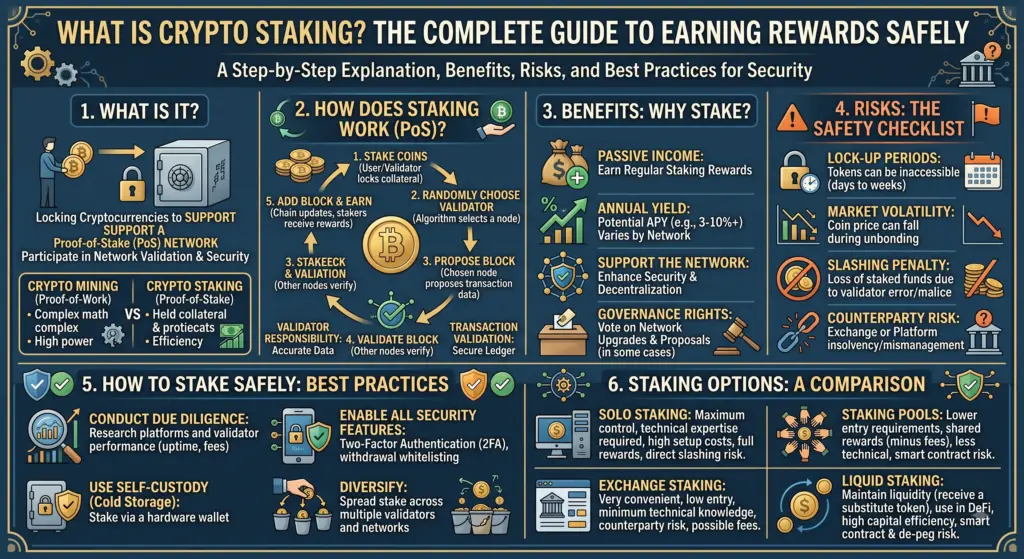
Crypto staking is the process of locking or delegating native digital assets to support a Proof-of-Stake blockchain network. In exchange for maintaining operational security, participants earn protocol rewards paid in cryptocurrency. While staking offers an attractive way to generate yield on otherwise idle crypto holdings, it introduces additional layers of technical, liquidity, and market risk that require active risk management.
Hi! Have you ever wondered if your digital assets could work for you while sitting idle in your wallet?
Holding cryptocurrency during market cycles can feel nerve-wracking, especially when you are watching market fluctuations without generating any cash flow.
This emotional rollercoaster leaves many investors searching for reliable ways to put their digital assets to work without selling them outright.
In this comprehensive guide on What Is Crypto Staking?
You will discover how blockchain consensus mechanisms reward active participants and how you can safely navigate this landscape to achieve a positive financial [Outcome].
Understanding how to generate yield in the modern 2026 Web3 ecosystem requires looking beyond surface-level promises.
Staking has evolved into a multi-billion dollar pillar of modern decentralized finance, powering major networks like Ethereum, Solana, and Cardano.
By reading this guide, you will gain a clear, step-by-step understanding of how staking works, how it compares to holding, and how to evaluate potential risks so you can make informed, confident financial decisions.
📖 Recommended Reading: Evaluating different trading and investment platforms? Read our detailed breakdown on Groww vs. Zerodha: Which Investment App is Best for Modern Traders? to choose the right brokerage for your portfolio.
ZenvestAi Explains
Crypto staking is an economic commitment where cryptocurrency holders lock or delegate their native tokens to support a Proof-of-Stake blockchain network.
By committing assets, participants enable validator nodes to verify transactions, propose new blocks, and maintain decentralized security.
In return for performing these vital consensus operations, stakers receive protocol rewards in the form of additional tokens.
However, staking differs from bank deposits because rewards fluctuate, assets face price volatility, and unbonding periods can restrict immediate liquidity.
What the Post Covers
- What Is Crypto Staking and How Does It Work?
- What Happens to Your Cryptocurrency When You Stake It?
- How Does Crypto Staking Compare to Simply Holding?
- Why Do Proof-of-Stake Blockchains Rely on Staking?
- Who Can Participate in Crypto Staking in 2026?
- Is Staking the Same as Earning Bank Interest?
- Is Crypto Staking Truly Passive Income?
- The ZenvestAI View: Staking Is More Than Yield
- Glossary of Essential Cryptocurrency Staking Terms
- Frequently Asked Questions (Voice & Conversational Queries)
- The Bottom Line
What Is Crypto Staking and How Does It Work?
Crypto staking is fundamentally an economic incentive model that replaces traditional resource-intensive mining.
In a Proof-of-Stake consensus mechanism, the blockchain relies on economic value rather than computing power to decide who gets to validate the next batch of transactions.
When you stake your tokens, you are essentially placing a financial deposit that guarantees your honesty in maintaining the public ledger.
       1. User Wallet (Holds Tokens)
       2. Delegation to Validator Node
       3. Network Consensus & Block Validation
       4. Protocol Generates Rewards
       5. Rewards Distributed Back to User Wallet]
💡 Build Capital First: Looking to generate extra cash flow to fund your investment accounts? Explore 25 High-Profit, Low-Investment Business Ideas for Aspiring Entrepreneurs (2026 Global Guide) to launch a low-overhead business venture.
How does the staking process actually function?
Quick Insight: Staking functions by linking network security directly to financial value committed by network participants. Token holders delegate their coins to validators who operate dedicated server infrastructure. The network randomly selects validators to propose and attest to new blocks based on their total stake, distributing fresh tokens as incentives.
The exact mechanics of staking vary across different blockchain architectures. Some protocols require participants to run their own validator nodes, requiring dedicated hardware, specialized software, and uninterrupted internet uptime. Conversely, most modern blockchains allow average token holders to delegate their voting weight to existing, professionally run validator nodes without giving up underlying ownership of their funds.
What Happens to Your Cryptocurrency When You Stake It?
When you stake your cryptocurrency, your assets remain on the blockchain under strict smart contract rules rather than disappearing. Your tokens act as a collateral deposit that remains attached to your wallet address or a specialized protocol contract. Depending on the design of the specific network, your assets undergo distinct operational changes regarding control and accessibility.
- Lock-Up Periods: Certain blockchains enforce mandatory timeframes during which your staked tokens cannot be moved, traded, or transferred.
- Unbonding Windows: When you decide to stop staking, networks like Cosmos or Ethereum mandate an unbonding waiting period before assets fully return to your liquid balance.
- Liquid Staking Tokens (LSTs): Modern liquid staking protocols issue derivative tokens representing your staked position, allowing you to maintain financial [Synergy] and liquidity across decentralized application markets.
- Compounding Mechanics: Staking rewards may automatically reinvest into your base stake or require periodic manual claiming transactions.
🎯 Master Wealth Strategy: Staking is just one piece of a comprehensive portfolio. Check out our step-by-step framework in The Complete Master Plan to Building Wealth to construct a resilient long-term financial strategy.
How Does Crypto Staking Compare to Simply Holding?
Choosing between simply holding cryptocurrency and staking it comes down to balancing raw market exposure against additional operational complexity. Holding cryptocurrency keeps your assets completely liquid, allowing you to sell or transfer them instantly whenever market conditions change. However, buy-and-hold strategies generate zero yield, leaving your total token count static regardless of how long you hold.
Staking allows you to build token quantity over time while keeping exposure to potential price appreciation. Yet, this additional return mechanism introduces specific trade-offs that every investor must calculate carefully.
📊 Holding vs. Staking
| Factor | Simply Holding Crypto | Staking Crypto |
| Asset Ownership | Yes, full control | Yes, subject to protocol rules |
| Network Participation | Minimal / Passive | Active consensus support |
| Potential Staking Rewards | None | Yes (Variable APY) |
| Market Price Exposure | Direct | Direct |
| Liquidity & Transferability | Immediate | Restricted during lock-up/unbonding |
| Validator & Slashing Risk | None | Applicable |
| Operational Complexity | Very Low | Moderate to High |
Major crypto platforms categorize yield products into Principal Protected Staking and High-Risk On-Chain Yields. Understanding the source of your yield is critical before committing capital:
- Principal Protected Staking: Yield comes directly from native blockchain consensus rewards (e.g., validating transactions on Ethereum or Solana).
- On-Chain Yields: Yield is generated by routing your assets into external decentralized protocols (such as Lista, Aave-Plasma, Babylon, or Solv). While yields can range from 0.2% to 2.7% APR, these products carry higher exposure to smart contract vulnerabilities and protocol failures.
Why Do Proof-of-Stake Blockchains Rely on Staking?
Blockchains require consensus mechanisms to ensure that all distributed nodes agree on a single, unalterable transaction history. Proof-of-Stake achieves this agreement by making economic dishonesty prohibitively expensive for participants. When validators have millions of dollars worth of native tokens tied up in the network, attacking the system directly destroys the value of their own capital investment.
Honest Behavior ──> Earns Staking Rewards + Block Fees
Dishonest Behavior ──> Triggers Slashing Penalty & Capital Loss]
How does staking improve blockchain security?
ZenvestAi Insight: Staking improves blockchain security by creating a direct financial penalty for network attacks. If a validator attempts to double-spend transactions or approve invalid blocks, the protocol automatically executes a slashing penalty, permanently destroying a portion of their staked assets and removing them from consensus.
Modern blockchains achieve multiple core objectives through well-designed staking mechanisms:
- Economic Network Defense: High total value staked makes acquiring a majority stake economically unfeasible for bad actors.
- Transaction Integrity: Distributed validator nodes continuously verify and log valid transactions without central authority oversight.
- Decentralized Infrastructure: Broad token delegation prevents power from concentrating inside a handful of centralized mining pools.
- Governance Engagement: Staking often grants participants proportional voting power on key protocol upgrades and treasury allocations.
Who Can Participate in Crypto Staking in 2026?
Participation in crypto staking is open to almost anyone holding native Proof-of-Stake tokens, provided they choose an approach suited to their technical skill.
The Web3 ecosystem in 2026 offers diverse entry points tailored to individual capital levels, technical capabilities, and risk tolerances.
- Individual Hardware Validators: Technical users who run independent validator nodes, requiring significant capital thresholds (such as 32 ETH on Ethereum) and high hardware availability.
- Non-Custodial Delegators: Everyday investors who delegate their token voting power to public validators directly from hardware or software wallets.
- Centralized Exchange Stakers: Users who utilize custodial exchange platforms to manage technical setup in exchange for a small convenience commission fee.
- Liquid Staking & Restaking Participants: Investors using decentralized smart contracts (like Lido or Rocket Pool) or restaking layers (like EigenLayer) to maximize capital efficiency across multiple protocols.
![Real-world example of exchange-based native staking for Ethereum (ETH) and Solana (SOL) with liquid tokens like WBETH and BNSOL.]](https://zenvestai.com/wp-content/uploads/2026/08/Real-world-example-of-exchange-based-native-staking-for-Ethereum-ETH-and-Solana-SOL-with-liquid-tokens-like-WBETH-and-BNSOL-730x1024.jpeg)
- Centralized platforms simplify liquid staking by offering native liquid wrapper tokens like WBETH and BNSOL.
- When you stake Ethereum or Solana on major platforms, you receive derivative liquid tokens (e.g., WBETH for ETH or BNSOL for SOL).
- These liquid tokens automatically accrue daily staking rewards (such as 2.32% APR on ETH or 4.65% APR on SOL) while allowing you to retain liquidity to redeem, trade, or utilize them within decentralized applications.
Is Staking the Same as Earning Bank Interest?
Staking rewards are fundamentally distinct from traditional bank interest because they derive from protocol inflation and network activity, not institutional lending. When you deposit cash into a conventional bank savings account, the institution lends those funds out to borrowers and pays you a fixed interest rate based on financial regulations.
Staking rewards originate directly from the underlying blockchain protocol code. The network mints new native tokens or redistributes user transaction fees to reward participants for maintaining computational integrity.
Bank Account: Customer Deposit ──> Bank Lending ──> Guaranteed Interest Rate
Crypto Staking: Native Token Lockup ──> Protocol Validation ──> Dynamic Staking Rewards]
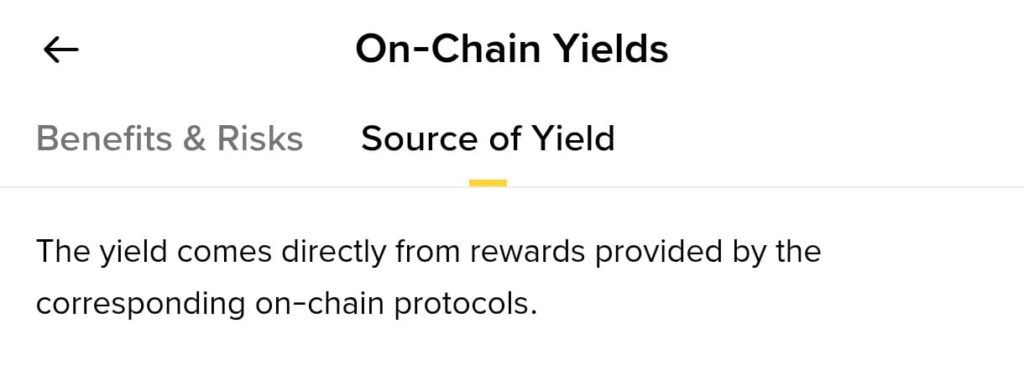
⚠️ Real-World Risk Alert: What You Must Know About On-Chain Yields
- Source of Yield: Rewards come directly from third-party protocols, not central exchange guarantees.
- Protocol Failure Risk: Technical issues, operational bugs, or smart contract exploits in external protocols can result in partial or total asset loss.
- Variable Rewards: Advertised APR rates (e.g., 1.8%–2.7% on USDT or 0.3%–0.54% on Bitcoin re-staking) fluctuate based on protocol demand and market conditions.
What is the difference between APR and APY in staking?
ZenvestAI Insight: APR measures simple annual reward percentage without compounding, whereas APY accounts for compound growth over time. If you earn rewards and re-stake them continuously, your effective yield aligns with APY. However, changing network reward rates, validator commissions, and fluctuating token prices mean advertised rates are never guaranteed permanent returns.
Is Crypto Staking Truly Passive Income?
While staking yields accrue without daily manual trading, calling crypto staking completely passive income overlooks significant ongoing risks.
Passive income implies a hands-off asset that grows securely over time without active monitoring.
Staking, however, requires continuous oversight to protect your invested capital against protocol changes, fee hikes, and infrastructure failures.
To maintain a healthy [Return on Investment], stakers must monitor several critical operational variables:
1. Validator Uptime & Health: If your chosen validator goes offline or experiences technical faults, your rewards drop and downtime penalties may apply.
2. Volatile Token Valuation: Earning a 6% annual token reward will still result in net fiat losses if the underlying token price declines significantly over that same timeframe.
3. Smart Contract Security: Utilizing liquid staking protocols exposes your assets to potential smart contract bugs or protocol exploits.
4. Evolving Tax Obligations: Tax authorities across various jurisdictions treat staking rewards as taxable income upon receipt, creating dynamic tax liabilities.
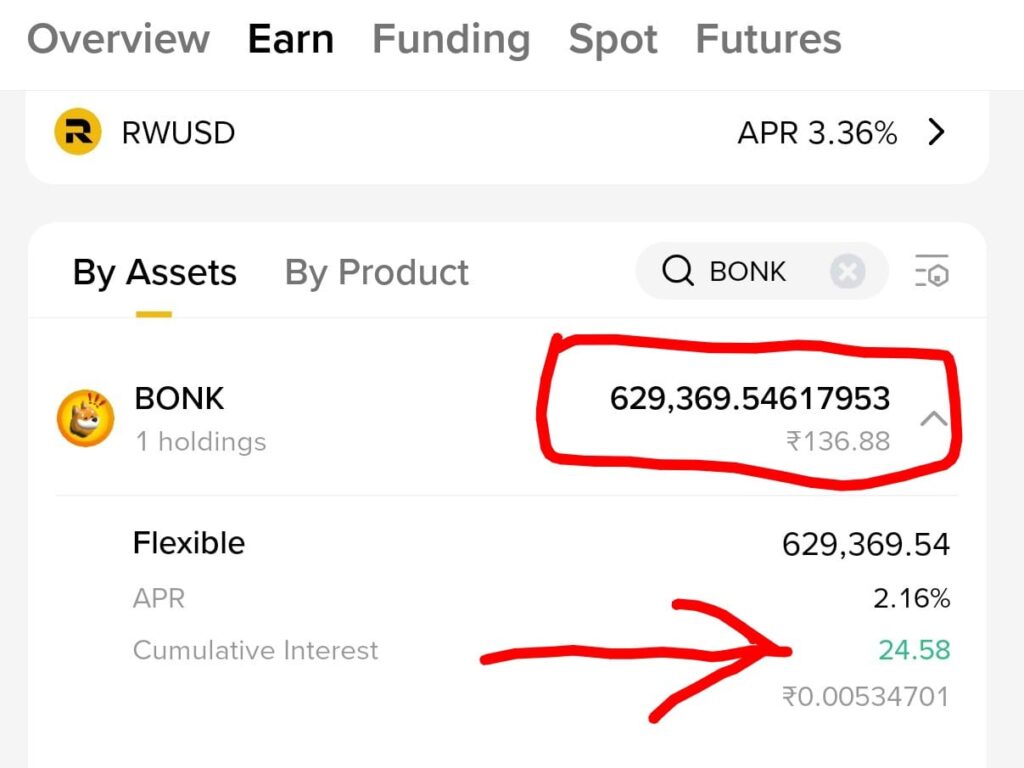
Flexible earn products allow automatic interest accumulation without locking your funds.
For instance, holding a flexible meme token allocation (e.g., 629,369 BONK) at a 2.16% APR generates daily cumulative interest directly into your account balance.
However, as shown in real portfolio tracking, earning cumulative token interest (e.g., +24.58 tokens) does not prevent overall fiat value from fluctuating when the market price shifts.
The ZenvestAI View: Staking Is More Than Yield
At ZenvestAI, we view crypto staking as active economic participation in a digital ecosystem rather than a speculative yield-chasing mechanism. A headline APY of 15% or 20% can look enticing at first glance, but high nominal yield often compensates for high token inflation or underlying protocol instability.
A disciplined investor evaluates real net returns using a holistic framework:
Real Staking Return ≈ Nominal Staking Rewards − Validator Fees − Inflation − Penalties ± Asset Price Movement
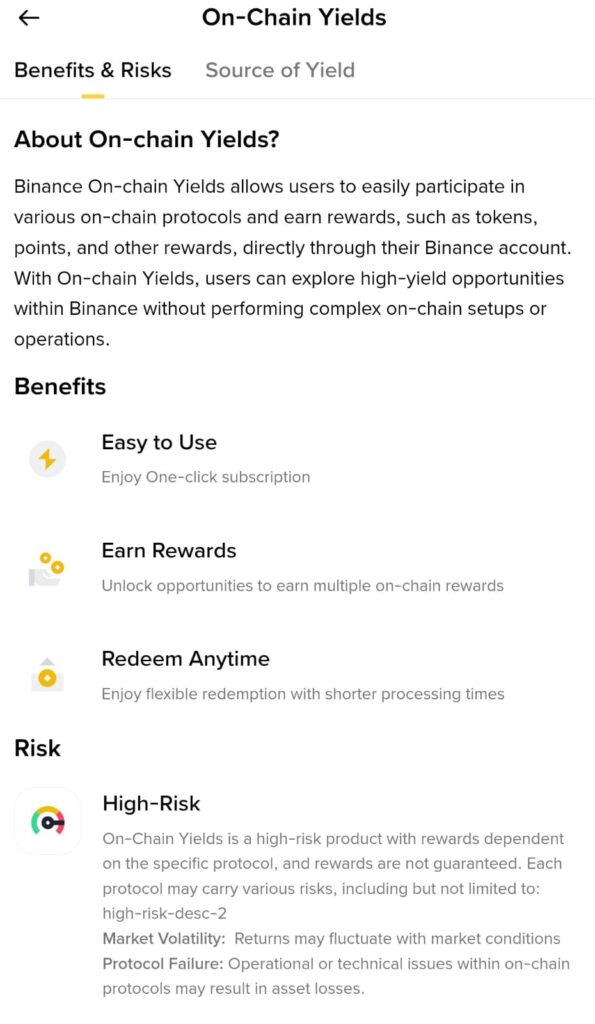
⚡ Pre-Staking Evaluation Checklist
Before committing your digital assets to any staking mechanism, complete these essential due diligence checks:
- [ ] Identify Protocol Architecture: Is this native protocol consensus staking, or a high-risk third-party lending pool?
- [ ] Verify Unbonding Windows: Exactly how many days does it take to unstake tokens if you need fast liquidity?
- [ ] Evaluate Custody Model: Do you retain control of your private keys, or are you handing custody over to a centralized third party?
- [ ] Analyze Validator Performance: Does the validator have a proven track record of 99.9%+ uptime and zero historical slashing incidents?
- [ ] Audit Smart Contracts: If using liquid staking or restaking protocols, have the underlying smart contracts been audited by reputable security firms?
Glossary of Essential Cryptocurrency Staking Terms
| Term | Simple Definition |
| Proof-of-Stake (PoS) | A blockchain consensus mechanism where block creation is weighted by economic stake committed to the network. |
| Validator Node | A dedicated server running blockchain software that verifies transactions and proposes new blocks. |
| Delegation | The act of assigning your token voting weight to a validator without transferring key ownership. |
| Slashing Penalty | Protocol enforcement that destroys a portion of a validator’s stake for dishonest or faulty behavior. |
| Unbonding Period | A mandatory protocol waiting timeframe required when removing assets from a staked state. |
| Liquid Staking | A mechanism issuing derivative tokens equal to staked assets, enabling liquidity within DeFi ecosystems. |
The Bottom Line
🚀 Crypto staking provides a powerful avenue for long-term Web3 investors to earn protocol rewards while actively contributing to blockchain security. It shifts blockchain validation away from energy-consuming mining toward capital-backed economic alignment. However, staking should never be treated as a risk-free savings account or guaranteed passive income.
To build a resilient digital asset strategy, focus on understanding protocol economics, selecting reliable non-custodial delegation channels, and carefully balancing reward rates against asset volatility. When approached with discipline, research, and realistic expectations, staking transforms idle tokens into active, productive assets within the expanding decentralized economy.
What are your thoughts on crypto staking? Have you delegated tokens to a validator, or do you prefer keeping your portfolio fully liquid? Share your questions and experiences in the comments below!
Frequently Asked Questions
Can you lose your crypto by staking?
Yes, you can lose money while staking through token price depreciation, slashing penalties, or smart contract exploits. If your validator acts maliciously or experiences severe technical faults, the blockchain protocol may slash a portion of the staked funds. Additionally, if the market value of the token falls sharply during a lock-up period, the fiat value of your total investment will decrease.
Can I withdraw my staked crypto at any time?
Withdrawal speed depends entirely on the specific rules of the blockchain protocol you choose. Some networks allow near-instant unstaking, while others impose unbonding delays ranging from a few hours to several weeks. Liquid staking protocols offer immediate liquidity by letting you trade your representative derivative tokens on open markets.
Do I need to keep my computer turned on to stake crypto?
You do not need to keep your personal device running if you delegate your tokens to a professional validator. When delegating, the validator node handles the hardware operations 24/7 on dedicated cloud servers. You only need to run your own computer continuously if you choose to operate an independent, solo validator node.
How are crypto staking rewards taxed?
In many jurisdictions, staking rewards are treated as taxable income at their fair market value on the day you receive them. Furthermore, selling or trading those rewarded tokens later may trigger additional capital gains taxes. Because crypto tax laws evolve rapidly, consult a qualified tax professional familiar with your local regulations.

Pingback: Why Does Staking Exist? The Ultimate Guide to Cryptoeconomic Security
Pingback: The Ultimate Risk-to-Reward Ratio Guide: Master Crypto Risk and Protect Your Capital
Pingback: How to Safely Set Up and Secure an Account on Binance