📌 Key Facts
| Feature | Details |
| Bot Type | Automated Quantitative Futures Grid Trading Bot |
| Supported Direction | Long, Short, and Neutral Market Stances |
| Minimum Capital | Starts from as low as 10 USDT |
| Available Leverage | 1× up to 15× (Conservative settings recommended: 2×–5×) |
| Primary Advantage | High capital efficiency and automated grid profit compounding |
| Core Risk | Liquidation during severe one-directional trend breakouts |
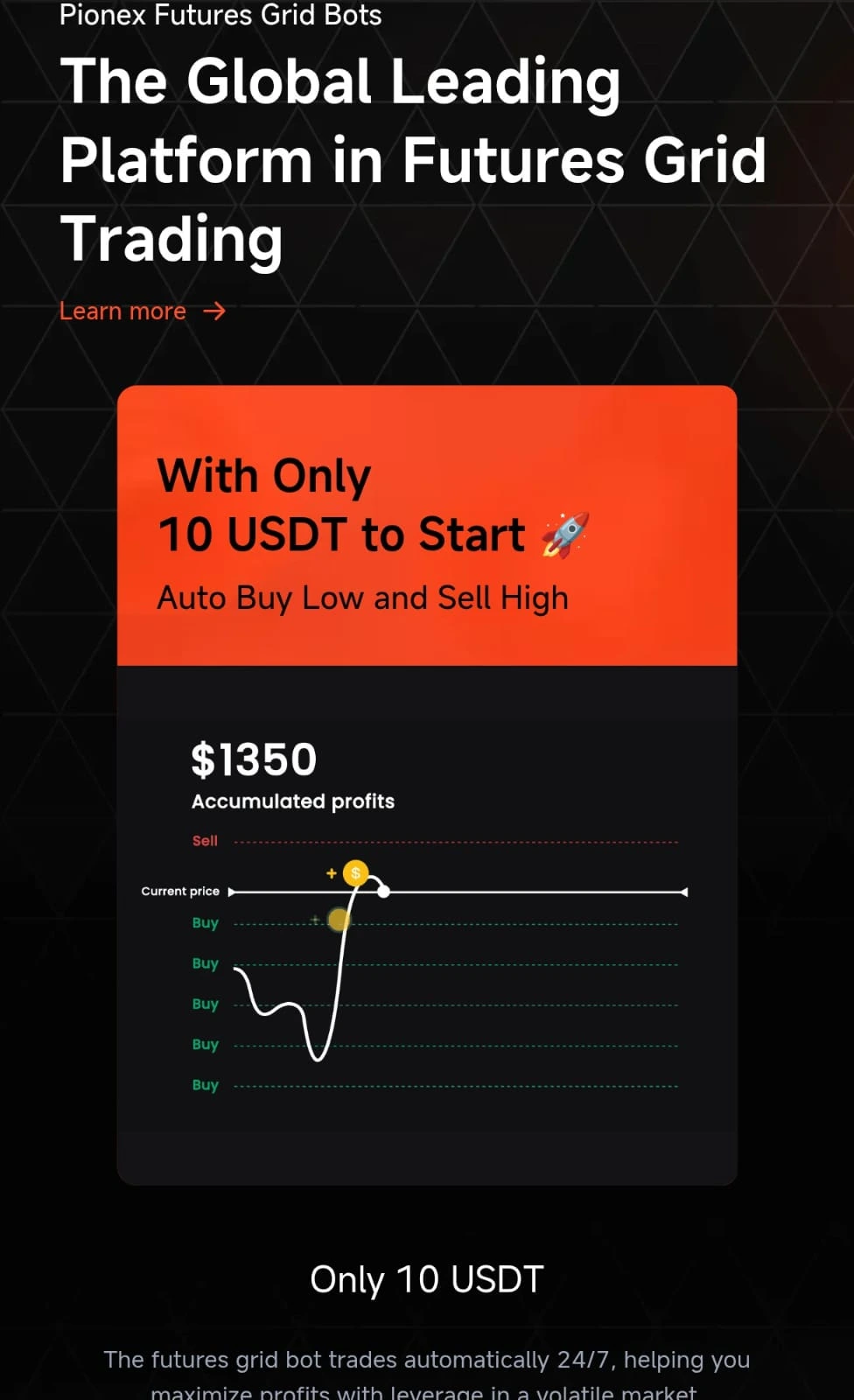
Visual breakdown of automated grid parameters and capital efficiency.
⚡ Key Takeaways:
- Automates Volatility Harvesting: The bot executes systematic buy-low and sell-high orders $24/7$, removing emotional stress from derivatives trading.
- Bi-Directional Profit Potential: You can capture profits in bull, bear, or ranging markets by selecting Long, Short, or Neutral grid strategies.
- Higher Capital Efficiency: Leverage allows you to control larger positions with smaller initial capital, starting at just 10 USDT.
- Dynamic Margin Support: Accumulated grid profits continuously cushion your position, helping mitigate funding fees and lowering liquidation risk.
- Discipline is Mandatory: Setting hard stop-loss levels and maintaining sensible leverage ($2\text{x}\text{–}3\text{x}$) are critical to preserving your trading capital.
📑 What This Guide Covers
- The Emotional Struggle of Manual Crypto Trading
- What is the Pionex Futures Grid Bot?
- Spot Grid vs. Futures Grid: The Core Differences
- Key Features: Why Traders Rely on Pionex Automation
- Step-by-Step Setup: Launching Your Bot in 4 Steps
- Critical Risk Management & Parameter Selection
- Glossary of Essential Futures Grid Terms
- The Bottom Line
The Emotional Struggle of Manual Crypto Trading
Have you ever lost sleep watching 15-minute candlestick charts, terrified that a sudden market flash-crash would wipe out your trading account?
In today’s volatile crypto markets, manual trading often turns into an exhausting battle against anxiety, FOMO, and erratic impulse decisions [emotional trading ka darr].
You try to time every swing, only to buy at the top or panic-sell at the exact bottom.
Indeed, market volatility is inevitable, but losing your capital to emotional fatigue is entirely preventable.
An automated Pionex Futures Grid Bot eliminates human hesitation by replacing guesswork with disciplined, algorithmic execution.
By combining quantitative grid logic with derivative contracts, this tool turns price turbulence into systematic profit opportunities.
ZenvestAi Explains
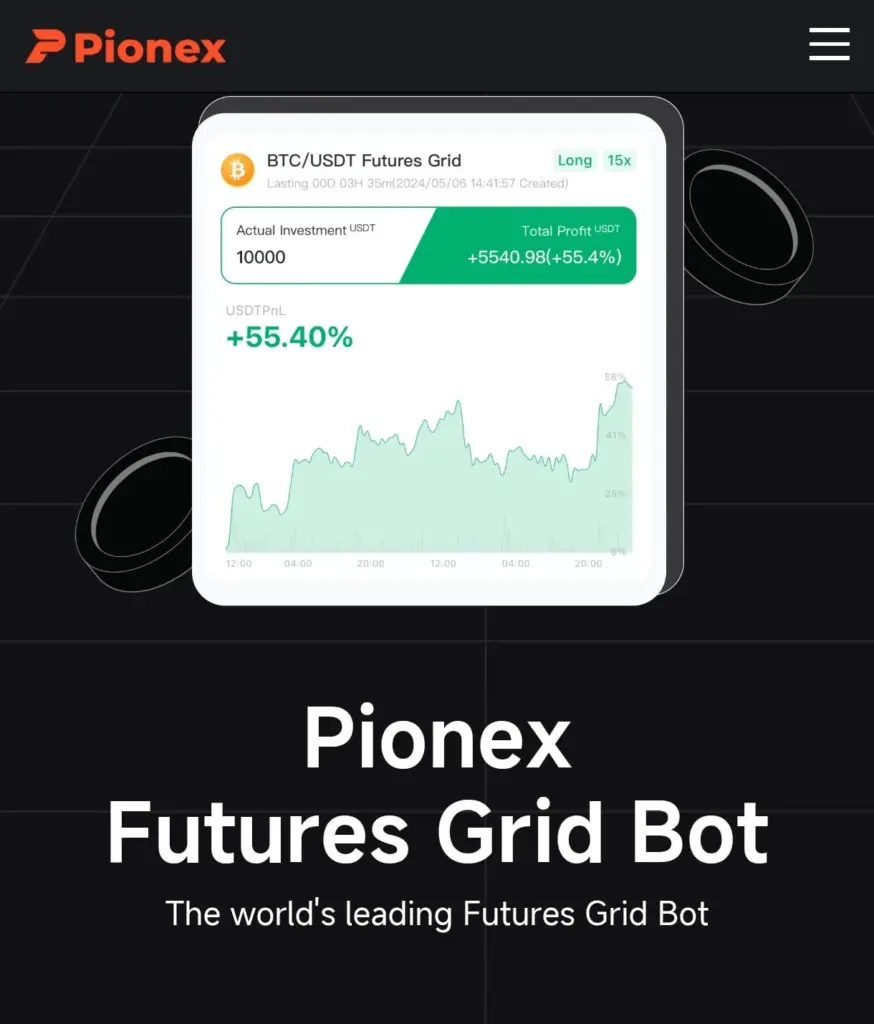
The Pionex Futures Grid Bot is an automated trading tool that deploys layered buy and sell orders within a user-defined price range using perpetual futures contracts.
Unlike traditional spot bots, it allows traders to utilize leverage (up to 15×) and generate profit during both uptrends and downtrends.
The bot continuously captures spread profits from sideways market swings, while automatically reinvesting grid earnings to support the liquidation margin and improve overall capital efficiency.
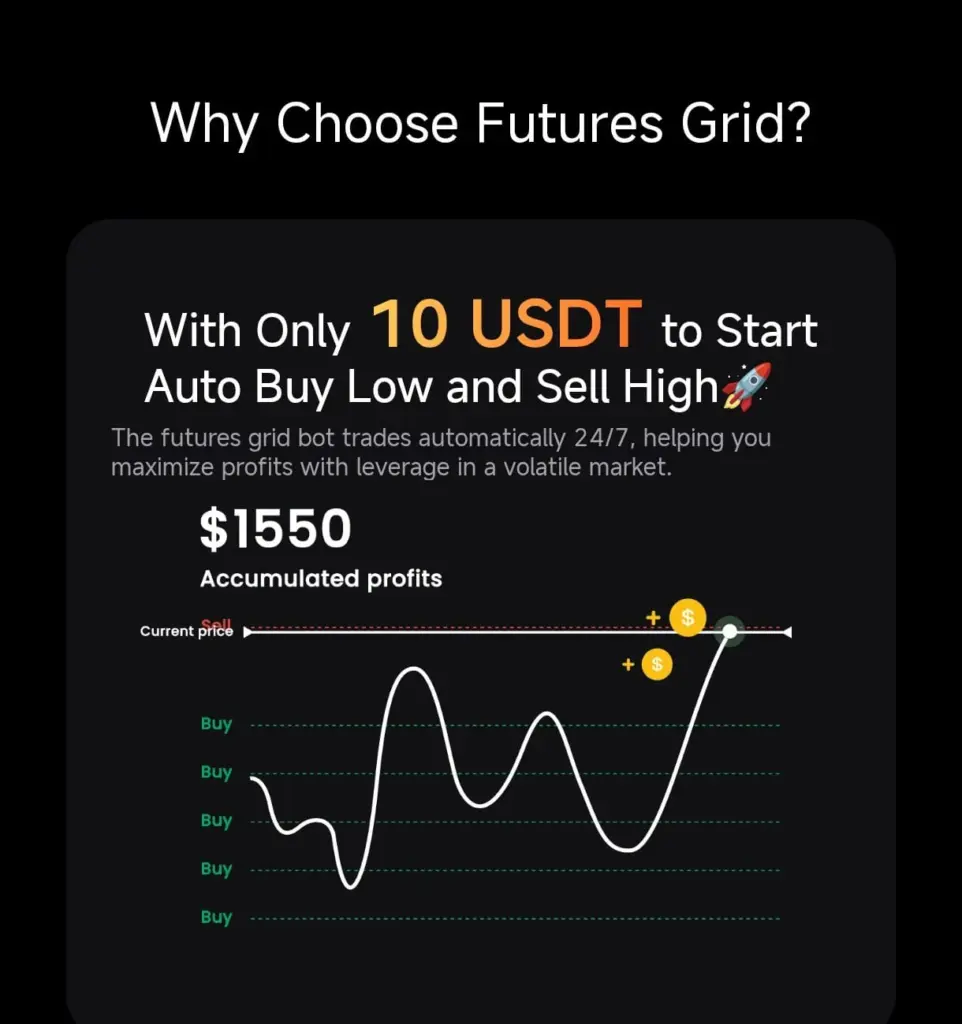
What is the Pionex Futures Grid Bot?
A Futures Grid Bot is an automated trading program that places layered limit orders across preset price intervals using perpetual futures contracts.
Instead of holding the physical underlying coin, the bot opens leveraged derivative positions to capitalize on minor price fluctuations.
Furthermore, this mechanism allows you to execute distinct directional strategies:
- Long Futures Grid: Opens long positions at lower grid lines and closes them at higher levels; it is best suited for bullish, upward-oscillating markets.
- Short Futures Grid: Opens short positions at higher grid lines and buys back at lower levels; it is designed for bearish or declining markets.
- Neutral Futures Grid: Places short orders above the entry price and long orders below it, making it effective for extended sideways consolidations.
[ UPPER PRICE LIMIT ]-
Sell Order 3 -- (Take Profit / Open Short)
Sell Order 2 -- (Take Profit / Open Short)
Sell Order 1 -- (Take Profit / Open Short)CURRENT MARKET PRICE-
Buy Order 1 -- (Open Long / Close Short)
Buy Order 2 -- (Open Long / Close Short)
Buy Order 3 -- (Open Long / Close Short)
[ LOWER PRICE LIMIT ]
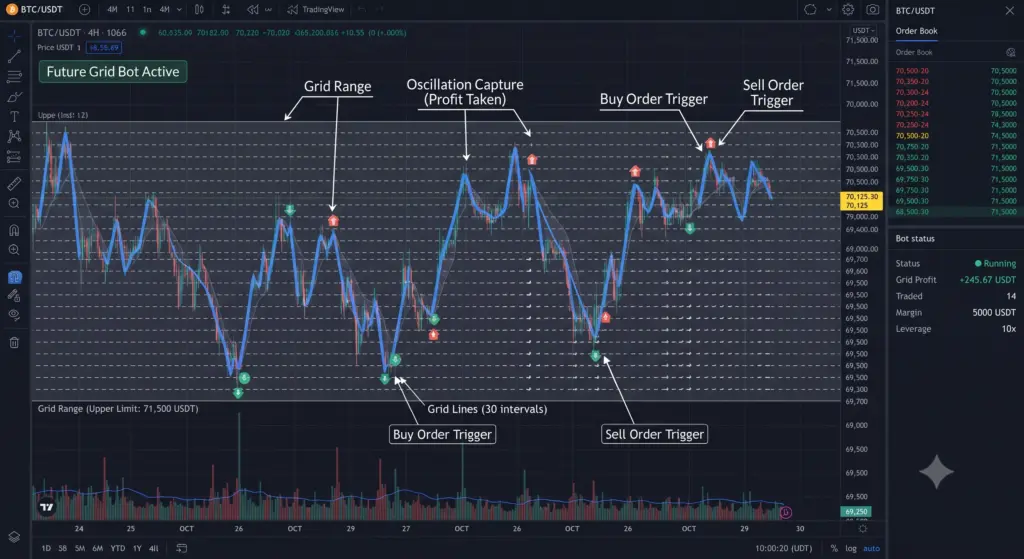
Spot Grid vs. Futures Grid:
To choose the right tool for your trading portfolio, it is essential to understand how futures grids differ from standard spot grids [spot aur futures me antar].
| Feature | Spot Grid Bot | Futures Grid Bot |
| Asset Ownership | You hold the actual cryptocurrency | You trade derivative contracts |
| Market Directions | Profitable primarily in bull or sideways markets | Profitable in Bullish (Long), Bearish (Short), and Neutral conditions |
| Leverage Capability | No leverage (1× only) | 1×–15× leverage |
| Capital Efficiency | Lower (Requires 100% collateral upfront) | High (Requires only margin collateral) |
| Liquidation Risk | Zero (Assets cannot be liquidated) | Present (Requires proper stop-loss and margin buffers) |
| Minimum Capital | Typically 50–100 USDT or more, depending on the trading pair | Starts at 10 USDT |
Zenvestai Quick Insight
While spot grid bots are safer for long-term spot holding, the Pionex Futures Grid Bot offers significantly higher capital efficiency.
It enables you to generate comparable cash flow using a fraction of your capital, provided you maintain conservative leverage levels below 5×.
Related Articles & Resources
To further enhance your crypto portfolio strategies, staking security, and trade execution discipline, explore these essential guides:
- Learn how to build a robust asset allocation plan with The Complete Ethereum Wealth Strategy.
- Discover passive income methods through What Is Crypto Staking? The Complete Guide to Earning Rewards Safely.
- Understand the foundational network mechanics via Why Does Staking Exist? The Ultimate Guide to Cryptoeconomic Security.
- Get started with derivative markets using What Is Crypto Futures Trading? A Complete Beginner’s Guide.
- Protect your capital effectively by reading The Ultimate Risk-to-Reward Ratio Guide: Master Crypto Risk and Protect Your Capital.
- Master your exit strategy with What Is Take Profit (TP)? The Ultimate Step-by-Step Guide to Locking in Crypto Trading Profits with Discipline.
🛡️ Key Features: Why Traders Rely on Pionex Automation
The Pionex Futures Grid Bot incorporates several built-in mechanisms that give systematic traders an edge over manual execution:
- Automated 24/7 Execution: The bot executes trades continuously without pause, capturing sudden market spikes and overnight dips while you sleep.
- Dynamic Liquidation Price Mitigation: As the bot harvests volatility, accumulated grid profits are credited to your margin balance. This mechanism steadily pushes your liquidation price further away from the current market price.
- Ultra-Low Capital Barrier: You can activate a live futures grid bot with as little as 10 USDT, making strategy testing accessible to beginners without risking substantial capital [kam paise se shuruat].
- No Extra Subscription Fees: Pionex provides these automated bots with no monthly software subscription fees; you only pay standard exchange trading fees.
Step-by-Step Setup: Launching Your Bot in 4 Steps
Setting up your first Pionex Futures Grid Bot requires just a few minutes of disciplined configuration.
[Step 1: Select Pair] ➔ [Step 2: Choose Stance] ➔ [Step 3: Allocate Margin] ➔ [Step 4: Launch & Track]
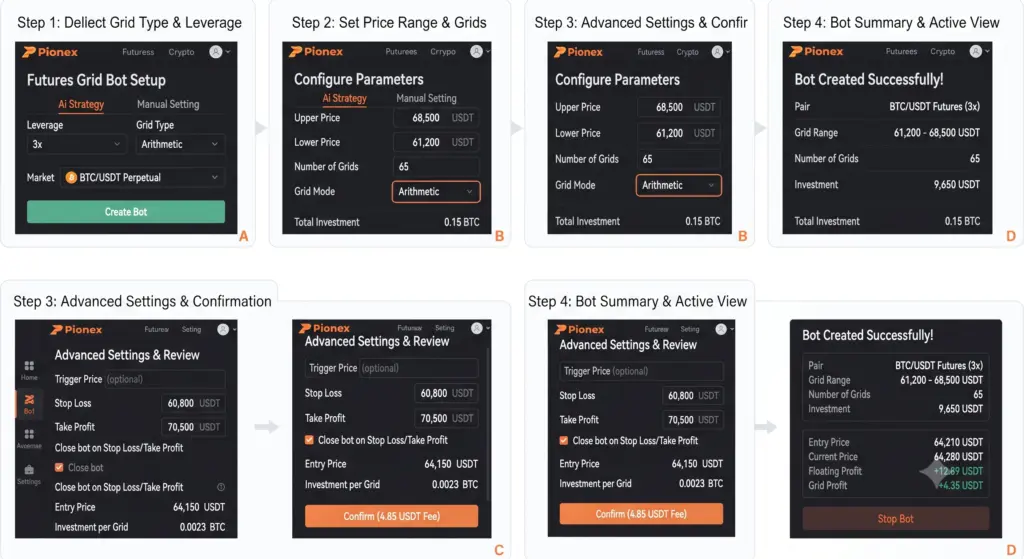
Step 1: Select Your Trading Pair
First, navigate to the Pionex trading terminal and select a high-liquidity market pair, such as BTC/USDT or ETH/USDT.
High-volume pairs minimize slippage and ensure consistent order fills during fast market moves.
Step 2: Determine Your Market Direction (Long, Short, or Neutral)
Next, examine higher-timeframe support and resistance levels.
If the asset is trending upward within an ascending channel, select Long; if the macro trend is downward, choose Short; if the asset is ranging between clear horizontal boundaries, select Neutral.
Step 3: Set Price Range, Grids, and Leverage
After that, enter your lower and upper price boundaries, choose your grid count (typically 30–80 grids for balanced spacing), and select your leverage multiplier.
- Beginner Recommendation: Use2×–3× leverage with Arithmetic grid spacing for stable performance.
- Investment Amount: Input your allocated margin (minimum 10 USDT).
Step 4: Configure Stop-Loss and Launch
Finally, set a strict stop-loss trigger just outside your lower boundary (for Longs) or upper boundary (for Shorts) to prevent unexpected liquidation. Confirm your parameters and click Create Bot.
Critical Risk Management & Parameter Selection
Automated trading tools eliminate emotional errors, but they do not eliminate market risk [risk management ka sahi tarika].
Follow these professional guidelines to safeguard your capital:
- Cap Your Leverage Multiplier: Never exceed 3×–5× leverage on futures grid bots. High leverage tightens your liquidation band, leaving little room for normal market fluctuations.
- Always Set a Hard Stop-Loss: A grid bot is designed to trade within a range, not survive an infinite trend against your position. If the price breaks your grid boundaries, exit the position systematically.
- Monitor Perpetual Funding Rates: Because futures contracts incur periodic funding fees every 8 hours, holding leveraged positions in crowded trades can erode your grid profits over extended periods.
- Choose Arithmetic Spacing for Tight Ranges: Arithmetic grids maintain equal dollar distances between orders, which is ideal for tight sideways consolidation channels.
Zenvestai Quick Insight
The most common error in futures grid trading is over-leveraging. Using 10× or 15× leverage creates a dangerously narrow liquidation window.
Sticking to 2× or 3× leverage gives your bot the breathing room needed to absorb normal market corrections safely.
📖 Glossary of Essential Futures Grid Terms
- Grid Range (Upper / Lower Limit): The absolute highest and lowest price levels within which the bot places orders.
- Grid Quantity: The total number of individual buy and sell orders distributed across the configured price range.
- Arithmetic vs. Geometric Spacing: Arithmetic spacing places orders at equal dollar increments (e.g., every $100, whereas Geometric spacing places orders at equal percentage increments (e.g., every 1%).
- Liquidation Price: The critical market price at which your allocated margin is insufficient to maintain your leveraged position, resulting in automated closure by the exchange.
- Funding Rate: Periodic payments exchanged between long and short contract holders to align perpetual futures prices with the underlying spot market price.
Frequently Asked Questions
What happens if the market price breaks out of the grid range?
When the price rises above the upper limit or drops below the lower limit, the bot stops executing new trades and pauses order placement. If the price moves back inside your defined boundaries, the bot resumes operations automatically.
Zenvestai Quick Insight
If price breaches your grid limits, your bot stops generating cash flow.
To protect your margin during severe downtrends, always set an automated stop-loss just below your lower grid threshold rather than letting an off-range position float unmanaged.
Can you get liquidated using a Pionex Futures Grid Bot?
Yes, liquidation is possible because the bot utilizes leveraged derivatives.
If the market moves sharply against your directional bias and breaches your liquidation threshold before hitting a stop-loss, your margin can be liquidated.
Zenvestai Quick Insight
Liquidation risk is directly tied to leverage and range settings. You can minimize this risk by utilizing conservative leverage (2×–3×), setting a clear stop-loss trigger, and allowing grid profits to replenish your maintenance margin.
How much money do I need to start a futures grid bot on Pionex?
You can start a futures grid bot on Pionex with as little as 10 USDT. The exact minimum depends on your chosen trading pair, grid density, and leverage settings.
Zenvestai Quick Insight
Starting with 10–50 USDT is an effective way to test grid spacing and understand bot mechanics in real market conditions without exposing significant personal savings to downside risk.
🚀 The Bottom Line
The Pionex Futures Grid Bot offers a disciplined solution for traders looking to capture crypto market volatility without staring at charts all day.
By automating high-frequency buy and sell orders across structured price grids, it allows you to generate incremental cash flow from price swings in any market direction.
However, automation is only as reliable as the risk management framework behind it. Treat leverage with care, set firm stop-loss parameters, and start with manageable position sizes.
When used responsibly, grid automation transforms unpredictable market volatility into a structured, stress-free trading process.
Join the Conversation!
Are you currently using grid bots to automate your crypto trading, or are you still placing manual orders on the charts?
What leverage multipliers have worked best for your strategy?
Share your thoughts, experiences, and questions in the comments below!
Related Articles & Resources
To expand your expertise across advanced digital asset strategies, account security, and market execution, explore these curated guides:
- Before scaling your positions, ensure your foundational security is bulletproof by learning How to Safely Set Up and Secure an Account on Binance.
- Optimize your capital leverage capabilities with our Ultimate Guide: What Is Crypto Portfolio Margin Financing?
- Discover advanced cross-exchange pricing inefficiencies in The Ultimate Guide to Spatial Arbitrage in Crypto Trading.
- Understand optimal execution paths across decentralized exchanges through What Is DEX Routing? The Ultimate to Best Crypto Swap Execution.
- Stay ahead of major blockchain infrastructure developments with the Ethereum Opens Early Platåberget Testnet for Huge Glamsterdam Upgrade Guide.
- Catch up on the latest happenings in the digital asset landscape via Top Trending Crypto & Global Market Stories Today.
