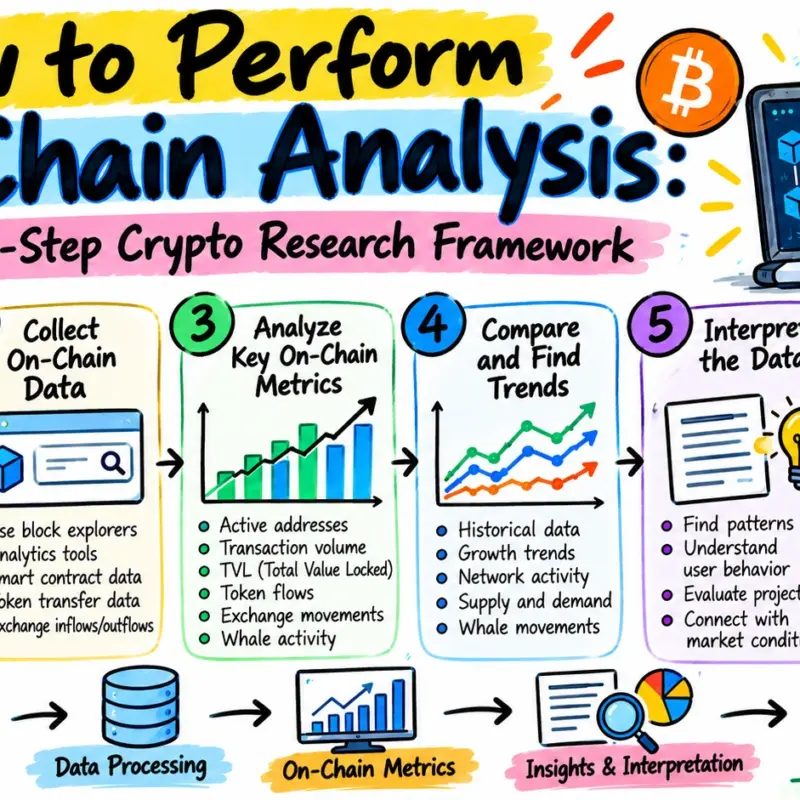
Understanding traditional finance is no longer optional for serious crypto investors. The language of today’s digital asset markets comes from a financial system that existed long before Bitcoin. Dividends, bonds, interest rates, collateral, liquidity, market spreads, derivatives and yield are not new crypto inventions. They are established financial concepts that have found new applications through blockchain technology.
Consider a few familiar situations.
A DeFi protocol advertises a 12% annual yield. A crypto exchange offers margin trading against collateral. A tokenized asset represents exposure to a publicly listed company. Bitcoin falls after a change in US interest-rate expectations. A stablecoin lending platform suddenly increases its borrowing rate.
These events may appear to belong exclusively to cryptocurrency. However, understanding them properly requires knowledge of traditional finance, commonly called TradFi.
The connection goes much deeper than terminology. Traditional financial markets influence the cost of borrowing, the availability of capital, investor behaviour, asset valuations and global liquidity. These same forces can affect Bitcoin, Ethereum, stablecoins, DeFi protocols and the wider crypto market.
This guide connects the most important TradFi concepts with their practical crypto applications. It starts with the foundations of stocks and bonds, moves through dividends, interest rates, yield, collateral and market structure, and then explains how these concepts operate in decentralised finance and tokenized markets.
The objective is simple: help you understand not just what a financial term means, but why it matters when analysing a cryptocurrency, using an exchange, evaluating a DeFi protocol or managing market risk.
The TradFi List for Crypto Users: Stocks, Bonds, Dividends, Yield, Collateral, Spreads and More Explained
What You Will Learn
- What TradFi means and how it differs from cryptocurrency and DeFi.
- How stocks, shares, equity and dividends work.
- Why bonds, coupons, interest rates and bond yields influence crypto markets.
- The difference between dividend income, staking rewards, lending interest and liquidity pool fees.
- How spot prices, bid-ask spreads, liquidity and market makers affect crypto trading.
- How collateral, leverage, margin and liquidation work.
- Why stock sectors and economic cycles matter to digital assets.
- How tokenized stocks and real-world assets connect traditional markets with blockchain.
- How to evaluate crypto yield without confusing advertised returns with actual profit.
- Which TradFi concepts every crypto investor should understand before trading.
1. What Is TradFi and Why Should Crypto Investors Understand It?
TradFi stands for Traditional Finance. It refers to the established financial system built around banks, stock exchanges, bond markets, insurance companies, brokers, investment funds, central banks and other financial institutions.
Traditional finance provides the infrastructure through which governments, companies, institutions and individuals borrow, lend, invest, save and transfer money.
For example, when a company raises capital by selling shares, a government borrows money by issuing bonds, or a bank provides a business loan, these activities belong to TradFi.
Cryptocurrency introduced a different way of organising certain financial activities. Instead of depending entirely on banks, brokers or centralised institutions, blockchain networks can allow users to transfer digital assets and interact with financial applications through smart contracts.
However, crypto did not develop outside the influence of traditional finance.
Bitcoin is traded against conventional currencies. Stablecoins often aim to maintain a value linked to the US dollar. Institutional investors may use traditional brokerage accounts, exchange-traded products and custody providers to obtain crypto exposure. DeFi protocols use concepts such as lending, borrowing, collateral, interest and market making.
The technology may be different, but many underlying financial ideas are familiar.
TradFi vs Crypto vs DeFi
These three terms are related, but they do not mean the same thing.
| Area | What it means | Example |
|---|---|---|
| TradFi | Financial services built around established institutions and regulated market infrastructure | Stock exchanges, banks and government bonds |
| Crypto | Digital assets and blockchain-based networks | Bitcoin, Ethereum and stablecoins |
| DeFi | Financial applications that use blockchain and smart contracts to provide financial services | Decentralised exchanges and lending protocols |
An important distinction: Not every crypto project is decentralised, and not every blockchain-based financial product is DeFi.
A centralised exchange can provide cryptocurrency trading without being a decentralised application. Similarly, a tokenized security can operate on a blockchain while remaining connected to a conventional financial issuer, custodian and legal framework.
This distinction becomes especially important when discussing tokenized stocks and real-world assets later in this article.
Why TradFi Knowledge Matters More in Today’s Crypto Market
Crypto markets are becoming increasingly connected to conventional financial markets.
Institutional participation, stablecoin infrastructure, tokenized financial products and regulated investment vehicles have created more connections between digital assets and traditional capital markets.
The Bank for International Settlements and the Financial Stability Board have examined how tokenisation could affect financial infrastructure, settlement, liquidity and financial stability.
In its 28 August 2025 executive summary, the BIS Financial Stability Institute highlighted both the potential benefits and the risks of tokenisation. These include faster processes and improved transparency, alongside concerns about liquidity mismatches, leverage, third-party dependencies and operational failures.
This tells us something important: blockchain technology is increasingly being considered as financial infrastructure, not simply as a way to create new cryptocurrencies.
For crypto investors, understanding TradFi is therefore a way to understand where capital comes from, how financial products are structured and what risks may exist behind an attractive digital asset.
2. Understanding Stocks: What Does Owning a Share Actually Mean?
A stock represents ownership in a company.
When you purchase shares of a publicly listed company, you become a shareholder. Your investment represents a small ownership interest in that business.
For example, if a company has 100 million shares outstanding and you own 1,000 shares, you hold 0.001% of its total shares, assuming all shares carry equal economic rights.
You may benefit when the company’s value increases. You may also receive dividends if the company declares and pays them.
However, share ownership also exposes you to business risk. If the company performs poorly, faces financial problems or loses investor confidence, its stock price may decline.
What Is Equity?
Equity is the ownership value remaining after liabilities are deducted from assets.
In a company, shareholders hold an ownership claim. They are not lenders who simply expect their original money back with interest.
Consider a simple example: A business has assets worth $10 million and liabilities worth $6 million.
Its accounting equity is: $10 million − $6 million = $4 million.
This $4 million represents the residual accounting value belonging to shareholders, although the actual market value of the company may be different.
How Is Equity Related to Crypto?
Crypto investors often use the word equity incorrectly when discussing tokens.
Owning a company’s stock generally provides an ownership interest under the applicable corporate and securities laws.
Owning a cryptocurrency does not automatically provide ownership of the organisation, protocol developers or company associated with that cryptocurrency.
For example:
- Owning Bitcoin does not make you a shareholder in a Bitcoin company.
- Holding ETH does not automatically give you equity in Ethereum-related businesses.
- Holding UNI does not automatically mean you own shares in the organisation associated with Uniswap.
- Holding a governance token may provide certain voting rights, but those rights are not necessarily equivalent to corporate ownership.
This is one of the most important differences between traditional shares and crypto tokens.
A token’s market value and its holder’s legal rights are two different questions.
Before evaluating a crypto asset, examine what the token actually gives its holder: governance rights, network access, fee discounts, staking participation, economic claims or simply transferable market exposure.
3. Types of Stocks: Growth, Value, Dividend and More
Traditional financial markets classify stocks according to their business characteristics, financial performance and investment objectives.
These classifications can also help crypto investors understand how capital moves between different types of assets.
Growth Stocks
Growth stocks belong to companies expected to increase revenue or earnings faster than the wider market.
Such companies often reinvest profits into expansion rather than distributing large dividends.
Technology companies are common examples.
The connection with crypto is straightforward. Investors may value emerging blockchain infrastructure projects according to expected future adoption, transaction activity, developer growth and potential revenue.
However, there is an important difference.
A growing company may generate profits and retain earnings. A growing blockchain network may generate substantial activity without necessarily creating equivalent economic value for its token holders.
Network growth does not automatically mean token value growth.
Value Stocks
Value stocks are companies that investors believe are trading below their estimated underlying value.
Analysts may examine earnings, cash flow, assets, debt and future business prospects to estimate whether a stock is undervalued.
Crypto investors use similar thinking when analysing tokens.
They may compare:
- Market capitalisation.
- Fully diluted valuation (FDV).
- Protocol revenue.
- Token supply.
- Circulating supply.
- Token unlock schedules.
- Network fees.
- Token demand.
- Value returned to token holders.
However, a low token price does not mean an asset is undervalued.
A cryptocurrency trading at $0.10 can have a much larger market capitalisation than another trading at $100, depending on the number of tokens in circulation.
Valuation should focus on the entire supply and the economic role of the asset, not its individual unit price.
Dividend Stocks
Dividend stocks are shares of companies that distribute part of their profits or available funds to shareholders.
Some investors prefer these companies because they provide a potential income stream in addition to changes in share price.
Crypto has similar-looking income opportunities, but the underlying mechanisms can be very different.
Staking rewards, lending interest and liquidity pool fees are not automatically dividends.
Defensive and Cyclical Stocks
Defensive companies provide products or services that people continue to use even during difficult economic conditions.
Examples include certain healthcare, food and utility businesses.
Cyclical companies are more sensitive to economic conditions. Their performance may improve when economic activity is strong and weaken during a slowdown.
Crypto assets can also display different market behaviours.
Bitcoin may attract demand as a scarce digital asset during certain market conditions. Infrastructure tokens may depend more heavily on network adoption. Smaller speculative tokens may experience much larger changes in demand when investors become cautious.
These are behavioural comparisons, not formal equivalents to traditional stock classifications.
4. What Are Stock Market Sectors and Why Do They Matter to Crypto?
A stock market sector is a group of companies operating in a similar industry or business area.
Sector classification helps investors understand which parts of the economy are performing well and which may be facing pressure.
Common stock market sectors include:
| Sector | Typical businesses | Possible crypto connection |
|---|---|---|
| Technology | Software, semiconductors and hardware | Blockchain infrastructure and computing |
| Financials | Banks, brokers and financial services | Exchanges, custody and financial tokenisation |
| Energy | Oil, gas and renewable energy | Bitcoin mining and energy costs |
| Healthcare | Pharmaceuticals and medical services | Blockchain-based data applications |
| Consumer Discretionary | Retail, travel and luxury goods | Consumer crypto adoption |
| Consumer Staples | Food and essential products | Payments and stablecoin use |
| Industrials | Manufacturing and infrastructure | Mining hardware and data centres |
| Communication Services | Telecom and digital platforms | Web3 applications and digital infrastructure |
| Utilities | Electricity and water services | Energy-intensive mining operations |
| Materials | Metals, chemicals and raw materials | Tokenized commodities |
Why Sector Performance Can Influence Crypto
Crypto markets do not operate independently of the global economy.
For example, a technology stock sell-off may reflect rising interest rates or concerns about future earnings. The same market conditions can reduce investor appetite for speculative digital assets.
Similarly, higher energy costs may increase operating pressure on some Bitcoin mining businesses.
The relationship is not always direct. Bitcoin has its own supply structure, network activity, market participants and adoption drivers.
However, sector performance can provide useful information about broader investor sentiment and economic conditions.
A useful analytical habit: Do not examine Bitcoin only against other cryptocurrencies. Also observe major stock indices, technology stocks, bond yields, the US dollar and global financial conditions.
5. What Are Dividends and How Do They Compare with Crypto Rewards?
A dividend is a payment that a company distributes to its shareholders.
Companies may pay dividends from profits or other legally available funds. The amount and timing depend on the company’s financial position, corporate decisions and applicable laws.
Dividends are not guaranteed.
A company can reduce, suspend or stop its dividend if its financial circumstances change.
How Stock Dividends Work
Suppose you own 100 shares of a company.
The company declares a dividend of $2 per share.
Your gross dividend payment would be: 100 × $2 = $200.
If the company’s share price is $50, the annual dividend yield based on a $2 annual dividend is: ($2 ÷ $50) × 100 = 4%.
This is called the dividend yield.
However, the share price may rise or fall, and the dividend may change.
Therefore, a 4% dividend yield does not mean the investor will automatically earn a total return of 4%.
Are Crypto Staking Rewards Dividends?
No. Staking rewards and dividends are different.
In proof-of-stake networks, users may stake eligible tokens to participate in network validation, directly or through a staking provider.
Rewards may be distributed according to network rules, validator performance, protocol conditions and other factors.
For example, Ethereum staking rewards arise from the network’s proof-of-stake mechanism. They are not corporate dividends paid by a company.
Similarly:
- Staking rewards: Compensation associated with participating in a proof-of-stake network.
- Lending interest: Compensation earned by supplying assets to borrowers or a lending arrangement.
- Liquidity provider fees: A share of eligible trading fees earned by supplying liquidity to a pool.
- Protocol incentives: Additional tokens distributed to encourage specific activities.
- Dividends: Corporate distributions made to eligible shareholders.
These mechanisms may all generate income, but they involve different rights, risks and sources of payment.
Why the Difference Matters
Imagine a platform advertises a 10% annual return.
Before comparing it with a dividend stock, ask:
- Where does the return come from?
- Is it generated by borrowers, trading fees, network issuance or promotional incentives?
- Is the return paid in a stablecoin or a volatile token?
- Can the underlying asset lose value?
- Is the return sustainable after incentives end?
- Are there withdrawal restrictions or smart contract risks?
A 10% reward paid in a token that loses 25% of its market value can produce a negative result in dollar terms.
The displayed reward rate is only one part of the investment outcome.
6. What Are Bonds? Understanding Debt Before Understanding Crypto Yield
A bond is a debt instrument.
When you purchase a bond, you are lending money to the issuer. The issuer may be a government, corporation or another eligible institution.
In return, the issuer agrees to pay interest according to the bond’s terms and generally repay the principal at maturity, subject to its ability and legal obligation to do so.
For example, a company issues a five-year bond with a face value of $1,000 and an annual coupon rate of 5%.
If you buy the bond at face value, you may receive:
- $50 in annual coupon interest.
- The $1,000 principal at maturity, provided the issuer fulfils its obligation.
This is a simplified example. Actual bond structures, payment frequency, taxes and repayment conditions can differ.
Stocks vs Bonds: What Is the Difference?
| Feature | Stocks | Bonds |
|---|---|---|
| Basic meaning | Ownership in a company | Loan to an issuer |
| Investor position | Shareholder | Creditor |
| Income | Possible dividends | Contractual interest or coupons |
| Maturity | Usually no fixed maturity | Usually has a maturity date |
| Voting rights | May provide voting rights | Normally no shareholder voting rights |
| Main risks | Business performance and share price | Credit risk, interest-rate risk and liquidity risk |
| Bankruptcy position | Generally behind creditors | Usually ahead of ordinary shareholders |
This difference is extremely important when evaluating crypto-related financial products.
A token that represents a debt claim is not the same as a token that represents ownership in an asset. The legal structure determines what the holder can actually claim.
7. What Is a Bond Coupon?
A coupon is the interest payment specified by a bond’s terms.
Suppose a bond has:
- Face value: $1,000.
- Annual coupon rate: 6%.
- Annual payment frequency.
The annual coupon payment is: $1,000 × 6% = $60.
The coupon rate is calculated using the bond’s face value, not necessarily the price at which the investor purchases it.
This distinction becomes important when bonds trade in the secondary market.
If the bond is purchased for $900, the annual coupon remains $60, but the current yield becomes: ($60 ÷ $900) × 100 = 6.67%.
This is called current yield.
Current yield is not the same as yield to maturity. Yield to maturity also considers the purchase price, repayment at maturity and the timing of cash flows.
8. What Is Bond Yield and Why Should Crypto Investors Watch It?
Bond yield measures the return associated with a bond under a particular calculation.
One of the most widely followed measures is the yield on government bonds, especially US Treasury securities.
Government bond yields are important because they influence how investors compare the potential return from different assets.
Consider a simplified situation.
An investor can choose between a relatively low-risk government security and a highly volatile cryptocurrency.
If government bond yields rise, some investors may demand a greater potential return before accepting the additional risk of holding speculative assets.
This can influence capital allocation across financial markets.
It does not mean Bitcoin must fall whenever Treasury yields rise. Markets respond to expectations, liquidity, economic growth, inflation, positioning and many other factors.
However, bond yields are useful indicators when studying broader financial conditions.
How Bond Prices and Yields Move
Bond prices and yields generally move in opposite directions.
If an existing bond pays a fixed coupon and newly issued bonds begin offering higher interest rates, the existing bond becomes less attractive.
Its market price may fall until its yield becomes more competitive.
The opposite can happen when market interest rates decline.
This relationship is important because bond markets help investors understand changes in the cost of money.
A Practical Example
Imagine a government bond pays $40 annually on a face value of $1,000.
Its coupon rate is 4%.
Now imagine new comparable bonds offer a 5% return.
Investors may prefer the new bonds. The older 4% bond may need to trade at a lower price to attract buyers.
Its price could decline to approximately $800, at which point its simple current yield would be: ($40 ÷ $800) × 100 = 5%.
This is an illustrative current-yield calculation, not a complete bond valuation.
The Connection Between Treasury Yields and Bitcoin
US Treasury yields are among the important indicators monitored by global investors.
When yields rise because of stronger growth expectations, inflation concerns or tighter monetary policy expectations, the effect on Bitcoin can differ depending on the broader environment.
For example:
- Higher real yields can increase the opportunity cost of holding non-yielding assets.
- A stronger US dollar can affect demand for dollar-priced assets.
- Tighter financial conditions can reduce risk-taking.
- Lower yields may make some investors more willing to consider riskier assets.
Bitcoin does not have a fixed coupon or contractual income stream. Its market value is determined by supply, demand, liquidity, investor expectations and other factors.
This is why monitoring government bond yields can add useful context to crypto market analysis.
9. Interest Rates: The Price of Borrowing Money
An interest rate is the cost of borrowing money or the return earned by lending it.
Central banks influence financial conditions through monetary policy. They may raise or lower policy rates depending on inflation, economic activity and other objectives.
When interest rates increase, borrowing may become more expensive.
When rates decline, borrowing may become cheaper, although the final rates offered by banks and financial institutions also depend on credit risk, funding costs and market conditions.
Why Interest Rates Matter to Crypto
Interest rates influence the wider financial system, and crypto is part of that system.
Consider the following chain of events:
- A central bank raises interest rates.
- Borrowing costs may increase.
- Some businesses and consumers reduce borrowing or spending.
- Investors reassess the value of riskier assets.
- Liquidity and investment demand may change.
- Crypto markets may experience a change in buying pressure.
This is not a guaranteed sequence. Markets often react before a central bank makes its official decision because investors trade on expectations.
The Difference Between Nominal and Real Interest Rates
A nominal interest rate is the stated interest rate before adjusting for inflation.
A real interest rate adjusts for inflation.
A simplified approximation is:
Real interest rate ≈ Nominal interest rate − Inflation rate.
For example:
- Nominal interest rate: 5%.
- Inflation rate: 3%.
- Approximate real interest rate: 2%.
Real yields are especially useful when analysing the opportunity cost of holding assets that do not generate contractual cash flows.
10. What Is Liquidity and Why Does It Matter More Than Many Traders Realise?
Liquidity describes how easily an asset can be bought or sold without causing a significant change in its market price.
A highly liquid market generally has sufficient buyers and sellers, active trading and relatively small differences between buying and selling prices.
A market with poor liquidity may experience large price movements even when the actual trade size is relatively small.
Liquidity in Traditional Markets
Major government bond markets and heavily traded stocks generally have substantial trading activity.
However, liquidity can still decline during periods of stress, uncertainty or unusual market conditions.
Liquidity in Crypto Markets
Crypto liquidity can differ significantly between assets and exchanges.
Bitcoin and Ethereum usually have deeper markets than many small-cap tokens, but liquidity can vary by trading pair, exchange, time and market conditions.
For example, imagine two tokens:
Token A has a deep order book with many buy and sell orders close to the current price.
Token B has only a small number of orders.
If a trader sells $500,000 worth of each token, Token A may experience a relatively small price impact, while Token B could fall sharply.
This is why market capitalisation alone cannot tell you whether a cryptocurrency is easy to trade.
Market Capitalisation Is Not Liquidity
Market capitalisation is generally calculated as: Market Capitalisation = Current Price × Circulating Supply.
Suppose a token trades at $2 and has 50 million circulating tokens.
Its market capitalisation is: $2 × 50 million = $100 million.
This does not mean $100 million is available to buy or sell the token.
Market capitalisation measures the estimated value of the circulating supply at the current market price. It does not measure the amount of cash available in the order book.
For crypto research, examine trading volume, order-book depth, liquidity pool reserves, exchange coverage and actual market impact.
11. What Is the Bid-Ask Spread?
The bid-ask spread is the difference between the highest price a buyer is willing to pay and the lowest price a seller is willing to accept.
It is one of the most practical TradFi concepts for crypto traders.
Suppose a Bitcoin trading pair has:
- Highest bid: $99,950.
- Lowest ask: $100,050.
The spread is: $100,050 − $99,950 = $100.
The midpoint is: ($99,950 + $100,050) ÷ 2 = $100,000.
The spread as a percentage of the midpoint is: ($100 ÷ $100,000) × 100 = 0.10%.
This is a simplified order-book example.
Why the Spread Matters
A trader who buys immediately at the ask and sells immediately at the bid may lose money even if the midpoint price does not change.
This is because the trader crosses the spread on both sides of the transaction.
A wider spread generally means a higher immediate trading cost.
Spread in DeFi
Decentralised exchanges can use different market structures.
In an automated market maker (AMM), the trader may not see a traditional central limit order book.
Instead, the trade executes against a liquidity pool.
The effective trading cost may include:
- The difference between the expected and executed price.
- Price impact caused by trade size.
- Pool fees.
- Network gas fees.
- Possible MEV-related execution costs.
Therefore, a low displayed fee does not necessarily mean a low total trading cost.
12. What Is the Spot Price?
The spot price is the current market price at which an asset can be bought or sold for immediate or near-immediate settlement under the relevant market convention.
In crypto, spot trading generally involves buying or selling the actual digital asset rather than trading a derivative contract.
For example:
If you buy 0.01 BTC through a spot trading pair, you acquire a Bitcoin balance in your exchange account, subject to the exchange’s custody and withdrawal arrangements.
If you buy a Bitcoin perpetual futures contract, you are taking a derivative position whose value tracks Bitcoin’s market price. You do not automatically acquire the underlying BTC.
Spot vs Futures vs Perpetual Contracts
| Product | What you hold | Main purpose |
|---|---|---|
| Spot | Actual digital asset or exchange balance representing it | Buying, selling and holding |
| Futures | Contract with a specified settlement structure | Speculation or hedging |
| Perpetual futures | Derivative without a fixed expiry | Continuous leveraged exposure |
| Options | Contract giving defined rights under specified terms | Hedging or strategies involving price movements |
Understanding this difference is essential because derivatives can create exposure without direct ownership of the underlying cryptocurrency.
13. What Are Market Makers?
A market maker is a participant that provides buy and sell quotes to help maintain trading activity.
Market makers generally seek to earn money from the spread, trading activity or other permitted strategies while managing inventory and market risk.
They operate in traditional financial markets and crypto markets.
In crypto, market makers may provide liquidity to centralised exchange order books or participate in other market-making arrangements.
Why Market Makers Matter
Without sufficient liquidity providers, buyers and sellers may find it difficult to execute large orders at reasonable prices.
Market makers help reduce trading friction, although they do not guarantee stable prices.
They may also reduce or withdraw liquidity during periods of extreme volatility.
Important: A market maker is not automatically a whale, manipulator or insider. Market making is a normal market function. However, the conduct, conflicts of interest and transparency of individual market participants still matter.
14. What Is Collateral in Traditional Finance?
Collateral is an asset pledged to support a loan or financial obligation.
If the borrower fails to meet the agreed conditions, the lender may have the right to claim or sell the collateral, subject to the contract and applicable law.
For example, a bank may provide a secured loan against property, securities or other acceptable assets.
The collateral reduces the lender’s potential loss, but it does not remove the risk of default.
How Collateral Works in Crypto
Crypto lending protocols use collateral to secure loans.
Suppose a user deposits ETH worth $10,000 into a lending protocol.
The protocol allows the user to borrow $5,000 in a stablecoin.
The collateral value is twice the borrowed amount.
The initial loan-to-value ratio is:
LTV = Loan Value ÷ Collateral Value × 100.
LTV = ($5,000 ÷ $10,000) × 100 = 50%.
If the ETH price falls to $8,000 while the loan remains $5,000:
LTV = ($5,000 ÷ $8,000) × 100 = 62.5%.
The user’s collateral position has become riskier.
If the protocol’s liquidation conditions are reached, some or all of the collateral may be sold to repay the debt.
What Is a Liquidation Threshold?
A liquidation threshold is the collateral-risk level at which a protocol may begin liquidating a borrower’s position.
Different protocols use different parameters, collateral factors, liquidation bonuses and risk controls.
A position can therefore become unsafe before the collateral is completely exhausted.
Crypto traders should understand the protocol’s actual rules rather than assuming that a particular LTV is always safe.
15. What Is Leverage and Why Can It Become Dangerous?
Leverage means using borrowed funds or financial exposure greater than the capital directly committed.
In traditional markets, investors may borrow through margin accounts or use derivatives.
In crypto, leverage is widely available through margin trading, futures and perpetual contracts.
Suppose a trader has $1,000 and uses 5x leverage.
The trader obtains exposure of: $1,000 × 5 = $5,000.
If the underlying position rises by 5%, the gross profit is approximately $250.
That represents a 25% gain on the original $1,000 margin before fees, funding and other costs.
However, if the position falls by 5%, the gross loss is approximately $250, equivalent to 25% of the original margin.
This example excludes maintenance margin, liquidation fees, slippage and exchange-specific calculations.
Why High Leverage Is Not Free Capital
Leverage magnifies both gains and losses.
It also makes a trader more sensitive to ordinary market fluctuations.
A 10% decline in an asset does not necessarily sound extreme in crypto. However, a leveraged position may be liquidated well before the underlying asset falls by that amount.
This is why position size, liquidation price and available margin matter more than simply choosing a leverage multiplier.
16. What Is a Stock Sector and How Does It Compare with Crypto Market Categories?
Traditional stock sectors classify companies according to the industries in which they operate.
Crypto assets can also be grouped by their main function.
Common crypto categories include:
- Layer 1 blockchains.
- Layer 2 scaling networks.
- Decentralised exchanges.
- Lending and borrowing protocols.
- Stablecoins.
- Liquid staking protocols.
- Oracle networks.
- Gaming and entertainment tokens.
- Decentralised physical infrastructure networks.
- Real-world asset platforms.
These categories help investors compare projects with similar purposes.
For example, comparing two decentralised exchanges may provide more useful information than comparing a decentralised exchange token with a gaming token.
However, crypto classifications are not always clean. One protocol may operate across several categories.
A research-based approach should examine what a project actually does, how it earns revenue, where its users come from and whether its token has a meaningful role.
17. What Are Derivatives and Why Do They Dominate Crypto Trading?
A derivative is a financial contract whose value depends on an underlying asset, reference rate or financial variable.
Traditional derivatives include futures, options, swaps and forwards.
Crypto markets use many of the same structures.
Crypto Futures
A futures contract allows participants to take exposure to an asset’s price through a contract with specified terms.
Depending on the contract, settlement may occur in cash or through delivery of the underlying asset.
Perpetual Futures
Perpetual futures are crypto derivatives that do not have a fixed expiry date.
They commonly use a funding-rate mechanism to help keep the perpetual contract price aligned with the spot market.
Options
An option gives its buyer a defined right, but not an obligation, to buy or sell an asset at a specified price under the contract’s terms.
Call options provide the right to buy. Put options provide the right to sell.
Options can be used for speculation, hedging and more advanced trading strategies.
Why Crypto Investors Should Understand Derivatives
Derivatives activity can influence spot-market conditions through hedging, arbitrage, liquidation and changes in market positioning.
However, derivatives trading volume should not be confused with actual spot demand.
A market may show substantial futures activity while relatively little actual cryptocurrency changes hands in spot markets.
For research purposes, examine open interest, funding rates, liquidation data, spot volume and order-book conditions together.
18. What Is Funding Rate in Crypto and How Is It Related to Traditional Finance?
Funding rates are periodic payments exchanged between long and short traders in perpetual futures markets.
Their purpose is to help keep perpetual contract prices close to the underlying spot price or reference index.
When funding is positive, long positions generally pay short positions.
When funding is negative, short positions generally pay long positions.
The exact calculation and payment conditions depend on the exchange.
A Simple Example
Suppose a trader holds a $10,000 perpetual futures position.
The funding rate for a particular funding period is 0.01%.
The funding payment is:
$10,000 × 0.01% = $1.
If the trader is on the paying side, the funding cost is $1 for that period.
A small funding rate can become significant when a position is large or held for an extended period.
Why Funding Rates Matter
Funding rates provide information about the balance of demand between long and short positions.
Extremely positive funding can indicate that long positions are paying a premium to maintain exposure.
However, funding rates alone cannot predict a market reversal.
They should be interpreted alongside open interest, spot demand, liquidation levels and broader market conditions.
19. What Is Yield? Understanding the Most Misused Word in Crypto
Yield is the return generated by an investment or financial position over a specified period.
In traditional finance, yield may come from bond interest, dividends or other investment income.
In crypto, yield can come from several different sources.
For example:
- Staking rewards.
- Lending interest.
- Liquidity pool trading fees.
- Protocol incentives.
- Tokenized financial products.
- Certain structured investment strategies.
The most important question is not simply how high the yield is.
It is where the yield comes from and what risks the investor takes to earn it.
APR vs APY
APR stands for Annual Percentage Rate.
APY stands for Annual Percentage Yield.
APR generally represents a simple annualised rate without including compounding.
APY includes the effect of compounding under the assumed reinvestment frequency.
For example, suppose an investment earns a nominal 10% annual rate, compounded monthly.
The approximate APY is:
APY = (1 + APR ÷ n)^n − 1.
Using an APR of 10% and 12 compounding periods:
APY = (1 + 0.10 ÷ 12)^12 − 1.
APY ≈ 10.47%.
This assumes that the rate remains unchanged and returns are reinvested at the same rate.
In real crypto markets, yields can change frequently.
Gross Yield vs Net Return
A displayed protocol yield is not necessarily the investor’s final return.
Consider a liquidity provider earning $120 in fees over a period.
The investor also pays:
- $15 in gas fees.
- $10 in other transaction costs.
- $35 in losses caused by changes in the relative prices of deposited assets.
The simplified net result is: $120 − $15 − $10 − $35 = $60.
The investor earned $120 in gross fees but retained only $60 after these assumed costs and losses.
This example illustrates why gross yield and net return must be separated.
For liquidity providers, impermanent loss, trading fees, gas costs and asset-price movements all matter.
For lending protocols, liquidation, bad debt, smart contract risk and borrower demand matter.
For staking, token-price changes, validator performance, lock-up conditions and slashing risks may matter.
A high APY is not proof of a high-quality investment.
20. What Is a Liquidity Pool and How Does It Connect with Traditional Market Making?
A liquidity pool is a collection of digital assets deposited into a smart contract so users can trade against that pool.
It is a core part of many automated market maker (AMM) systems.
In a traditional order-book exchange, buyers and sellers place orders at different prices.
In an AMM, a mathematical formula determines the exchange price based on the pool’s asset balances.
One widely used AMM design follows the constant-product formula: x × y = k.
Here:
- x represents the quantity of the first asset.
- y represents the quantity of the second asset.
- k represents the constant product, ignoring fees and other adjustments.
A Practical Constant-Product Example
Imagine an ETH/USDC pool containing:
- 10 ETH.
- 20,000 USDC.
The initial product is: 10 × 20,000 = 200,000.
Ignoring fees, if a trader adds 2,000 USDC to the pool, the new USDC balance becomes 22,000.
To maintain the constant product:
New ETH balance = 200,000 ÷ 22,000.
New ETH balance ≈ 9.090909 ETH.
The trader receives: 10 − 9.090909 = 0.909091 ETH.
The average execution price is approximately: $2,000 ÷ 0.909091 = $2,200 per ETH.
The initial pool price was: $20,000 ÷ 10 = $2,000 per ETH.
The trade moves the pool price because it changes the relative asset balances.
This is called price impact.
The calculation excludes trading fees, rounding, external arbitrage and other protocol-specific adjustments.
Why This Matters to Crypto Investors
The larger the trade relative to the pool, the greater the potential price impact.
This is why liquidity pool depth matters when evaluating a decentralised exchange.
A pool may show attractive trading fees but still be unsuitable for large trades if its liquidity is shallow.
21. What Is Impermanent Loss?
Impermanent loss is the difference between the value of assets held in a liquidity pool and the value those same assets would have had if they had simply been held outside the pool.
It is especially relevant to liquidity providers in AMMs.
Consider a simplified 50:50 ETH/USDC pool.
You deposit:
- 1 ETH worth $2,000.
- 2,000 USDC.
Your initial deposit is worth $4,000.
Now assume ETH rises from $2,000 to $4,000.
Under a fee-free constant-product model, the pool’s ETH balance falls while its USDC balance rises as arbitrageurs trade against the pool.
The pool’s holdings adjust to approximately:
- 0.7071 ETH.
- 2,828.43 USDC.
The total value becomes approximately $5,656.85.
If you had simply held your original assets, you would have:
- 1 ETH worth $4,000.
- 2,000 USDC.
Total: $6,000.
The difference is approximately $343.15.
This is the impermanent loss relative to simply holding the original assets.
It is not necessarily a realised loss when the assets remain in the pool, and trading fees or incentives may offset some or all of it.
However, the example shows why earning liquidity provider fees does not guarantee that providing liquidity is more profitable than holding the assets.
22. What Is a Stablecoin and Why Does It Connect TradFi with Crypto?
A stablecoin is a digital asset designed to maintain a relatively stable value against a reference asset, commonly a fiat currency such as the US dollar.
Stablecoins are widely used in crypto trading, payments, lending and decentralised finance.
They provide a way to represent dollar-linked value on blockchain networks.
However, not all stablecoins use the same backing model.
Main Types of Stablecoins
Fiat-backed stablecoins
These are designed to be supported by reserves such as cash, bank deposits or short-term government securities, subject to the issuer’s structure and disclosures.
Crypto-backed stablecoins
These use other crypto assets as collateral. Some require overcollateralisation to help absorb price volatility.
Algorithmic or mechanism-based stablecoins
These attempt to maintain a target price through supply adjustments, market incentives or other mechanisms. Their designs vary considerably, and some have failed under market stress.
Why Stablecoins Are Important to TradFi
Stablecoins connect blockchain markets with conventional financial assets and payment systems.
For example, a dollar-linked stablecoin can be used as a trading quote asset on a crypto exchange or as a borrowing asset in a DeFi protocol.
However, a stablecoin is not automatically equivalent to a bank deposit or a government-backed currency.
Investors should examine:
- Reserve composition.
- Redemption rights.
- Issuer structure.
- Custody arrangements.
- Audit or assurance reports.
- Regulatory status.
- Counterparty risk.
- Blockchain and smart contract risks.
A stablecoin’s market price can also temporarily move away from its intended peg.
23. What Are Tokenized Stocks and How Do They Differ from Traditional Shares?
Tokenized stocks are blockchain-based tokens designed to provide exposure to shares or the economic performance of listed companies.
They are part of a wider development known as asset tokenisation.
However, the term tokenized stock can describe different legal and economic arrangements.
A token might represent:
- A direct or legally recognised interest in an underlying security.
- A certificate or contractual claim linked to a security.
- A derivative providing price exposure.
- A product backed by shares held by a custodian.
These structures do not automatically provide identical rights.
Traditional Brokerage vs Tokenized Stock
| Feature | Traditional stock | Tokenized stock product |
|---|---|---|
| Trading infrastructure | Conventional securities market | Blockchain-based or hybrid infrastructure |
| Ownership | Share ownership under applicable law | Depends on the token’s legal structure |
| Shareholder voting | May be available | Not necessarily available |
| Dividends | Paid according to share rights | Depends on product terms |
| Trading hours | Usually defined exchange hours | May offer extended or 24/7 trading |
| Custody | Broker, custodian and central securities infrastructure | May involve custodians, issuers and blockchain wallets |
| Transfer | Through approved securities infrastructure | May allow on-chain transfers, subject to restrictions |
A Current Example: Binance and bStocks
Binance announced the launch of US stock and ETF trading on its platform on 1 June 2026. The announcement also discussed the planned introduction of bStocks tokenized securities.
Binance subsequently published product information describing bStocks as blockchain-based tokenized securities that provide exposure to the price performance of underlying listed equities.
An important distinction in Binance’s disclosures is that bStocks are not the same as direct ownership of ordinary shares and do not automatically provide shareholder rights.
Its product materials also describe eligibility and jurisdictional restrictions, including the relevant Abu Dhabi Global Market framework.
This illustrates why investors should not assume that every tokenized stock is equivalent to purchasing a share through a conventional brokerage account.
Product availability, legal rights, custody and redemption arrangements must be checked against the actual offering documents and the user’s jurisdiction.
For readers in India and other countries, access to an international platform does not automatically mean a product is legally available to every resident.
24. What Are Real-World Assets (RWAs)?
Real-world assets, commonly called RWAs, are assets or financial claims originating outside blockchain networks that are represented or connected to blockchain-based systems.
Examples include:
- Government securities.
- Corporate debt.
- Real estate interests.
- Commodities.
- Private credit.
- Certain fund interests.
RWA tokenisation attempts to connect traditional assets with blockchain infrastructure.
For example, a tokenized government bond product may represent an interest in a fund or legal arrangement holding government securities.
However, the token itself is not necessarily the government bond.
Investors must understand the legal structure, issuer, custodian, redemption process and rights associated with the token.
Why RWAs Matter to the Future of Crypto
RWAs are important because they create a potential bridge between conventional capital markets and blockchain applications.
They may enable new ways to transfer, settle, record and use financial claims.
For example, tokenized financial assets may potentially be used in certain collateral arrangements or integrated with blockchain-based applications.
However, there are important limitations.
The Bank for International Settlements’ 2025 work on tokenisation highlights issues such as liquidity mismatch, leverage, operational fragility, third-party dependencies and legal uncertainty.
The OECD’s January 2025 report also discusses challenges around interoperability, market fragmentation and the relationship between tokenized assets and their underlying conventional markets.
The key lesson: Putting an asset on a blockchain does not automatically make the underlying asset safer, more liquid or legally enforceable.
25. What Is a Stock Index and How Can It Help Crypto Investors?
A stock index measures the performance of a selected group of stocks according to a defined methodology.
It gives investors a broader picture of a market or sector.
Examples include:
- S&P 500.
- Nasdaq-100.
- Dow Jones Industrial Average.
- FTSE 100.
- Nikkei 225.
- Nifty 50.
- BSE Sensex.
Crypto investors can use major stock indices to understand broader risk sentiment and changes in financial market conditions.
For example, a decline in technology stocks may reflect concerns about high valuations, interest rates or economic growth.
These conditions can also affect speculative crypto assets.
However, stock indices are not direct indicators of Bitcoin’s future price.
Bitcoin may respond differently because it has its own market structure, supply schedule, network activity and investor base.
A useful research approach is to compare the behaviour of Bitcoin with major equity indices across different market environments rather than assuming a permanent relationship.
26. How Do Economic Cycles Influence Traditional Finance and Crypto?
Economic cycles describe periods of expansion, slowdown, contraction and recovery in economic activity.
During an expansion, businesses may increase investment, employment and production.
During a slowdown, consumers and businesses may reduce spending and borrowing.
These changes can influence:
- Company earnings.
- Interest rates.
- Bond yields.
- Inflation.
- Currency values.
- Credit availability.
- Investor risk appetite.
Crypto markets can respond to these conditions through changes in liquidity and investor demand.
Expansion
Investors may become more willing to hold riskier assets when growth expectations are strong and financial conditions support investment.
Slowdown
Concerns about economic growth may reduce demand for speculative assets.
Recession or Financial Stress
Investors may seek liquidity, reduce leverage and move toward assets they consider more stable.
Crypto can experience sharp declines during periods of forced selling or reduced market liquidity.
Recovery
Improving economic conditions and changing expectations about monetary policy may support renewed risk-taking.
These are broad patterns, not fixed rules. The timing and direction of crypto market reactions depend on the reason behind the economic change.
27. What Is the Relationship Between the US Dollar and Crypto?
The US dollar plays an important role in global financial markets.
Many major cryptocurrencies are quoted against USD or dollar-linked stablecoins.
The dollar also influences global funding conditions, trade and international investment flows.
A stronger dollar can sometimes create pressure on dollar-priced risk assets, while a weaker dollar can coincide with stronger demand for certain alternative assets.
However, the relationship is not automatic.
Bitcoin is influenced by many factors, including:
- Institutional demand.
- Spot market activity.
- Derivatives positioning.
- ETF-related flows.
- Network developments.
- Regulatory changes.
- Global liquidity.
- Investor expectations.
The US Dollar Index (DXY) is one indicator traders monitor when analysing currency conditions.
It measures the dollar against a basket of major currencies, not against Bitcoin directly.
For crypto research, the dollar is useful context rather than a standalone trading signal.
28. How Do Central Banks Influence Crypto Markets?
Central banks influence the financial system through monetary policy, liquidity operations and other tools.
The Federal Reserve, European Central Bank, Bank of England, Bank of Japan and other central banks have important roles in their respective economies.
Their decisions can affect:
- Policy interest rates.
- Government bond yields.
- Currency markets.
- Credit conditions.
- Financial market liquidity.
- Investor expectations.
Why Federal Reserve Decisions Receive So Much Attention
The US dollar is a major global reserve and funding currency.
The Federal Reserve’s monetary policy can therefore influence financial conditions beyond the United States.
When investors expect tighter monetary conditions, they may reassess the valuations of growth stocks, emerging markets and speculative assets.
Bitcoin and other cryptocurrencies can also be affected.
However, a Federal Reserve rate cut does not guarantee that Bitcoin will rise.
If the rate cut happens because of severe economic stress, investors may initially reduce risk exposure.
The reason behind the policy decision matters as much as the decision itself.
29. What Is the Difference Between a Crypto Exchange and a Traditional Stock Brokerage?
A traditional stock brokerage provides access to securities markets through an account and associated trading infrastructure.
A crypto exchange provides access to digital asset markets, which may include spot trading, derivatives and other services.
Some platforms now provide access to both traditional financial products and crypto-related products.
However, the two types of services may involve different legal entities, market infrastructure, customer protections and custody arrangements.
Key Differences
| Area | Traditional brokerage | Crypto exchange |
|---|---|---|
| Main assets | Stocks, bonds and other securities | Cryptocurrencies and related products |
| Market hours | Usually defined trading sessions | Crypto spot markets commonly operate 24/7 |
| Settlement | Conventional clearing and settlement systems | Exchange-led or blockchain-based settlement |
| Custody | Broker and securities custodian arrangements | Exchange custody or self-custody |
| Regulation | Depends on jurisdiction and product | Varies significantly by jurisdiction and service |
| Asset ownership | Defined by securities law and account arrangements | Depends on whether assets are held in custody or self-custody |
| Market risks | Market, credit and liquidity risks | Market, liquidity, technology and custody risks |
A major point of confusion is the assumption that every asset displayed on a single platform follows the same regulatory framework.
It may not.
A platform can provide multiple services through different legal entities or partners.
Always identify the actual issuer, broker, custodian and contract governing the product.
30. TradFi Assets You May Encounter on Crypto Platforms
Crypto platforms increasingly offer products connected with traditional financial markets.
Depending on the platform and the user’s jurisdiction, these may include:
- Tokenized securities.
- Stock trading.
- Exchange-traded funds.
- Gold-linked tokens.
- Commodity-linked products.
- Traditional financial market derivatives.
- Pre-IPO price exposure products.
- Tokenized money market fund interests.
However, the label used by a platform does not establish the legal nature of the product.
A stock, a tokenized security and a perpetual contract linked to a stock are three different instruments.
For example:
Buying a stock: You acquire the relevant shareholding interest through the applicable brokerage and securities infrastructure.
Buying a tokenized security: You acquire the rights described in the tokenized product’s legal documentation.
Buying a stock-linked perpetual contract: You obtain derivative exposure to the referenced price, not necessarily ownership of the underlying shares.
This distinction should be understood before considering any product.
31. How Should Crypto Investors Use TradFi Knowledge in Actual Research?
Learning financial definitions is useful, but applying them is what improves research quality.
A serious crypto investor should connect traditional financial indicators with the economics of a particular digital asset.
Here is a practical research framework.
Step 1: Understand the Broader Financial Environment
Examine:
- Federal Reserve policy.
- US Treasury yields.
- Inflation data.
- US dollar strength.
- Major stock indices.
- Credit conditions.
- Global liquidity indicators.
The objective is to understand whether broader financial conditions are supportive of risk-taking or creating pressure.
Step 2: Understand the Asset’s Market Structure
Examine:
- Spot trading volume.
- Bid-ask spread.
- Order-book depth.
- Exchange concentration.
- Derivatives open interest.
- Funding rates.
- Liquidation activity.
A token may have a large reported market capitalisation but insufficient liquidity to support substantial trading.
Step 3: Understand Its Economic Model
Ask:
- What does the project actually provide?
- Who uses the network?
- Where does demand come from?
- Does the protocol generate revenue?
- Who receives the revenue?
- Does the token capture any economic value?
- How are new tokens issued?
- When do token unlocks occur?
This is particularly important when comparing crypto tokens with dividend-paying stocks.
Step 4: Understand the Source of Yield
If a protocol advertises an attractive return, identify its source.
Is it funded by:
- Borrowers?
- Trading fees?
- Network issuance?
- Treasury incentives?
- Promotional token rewards?
- A structured strategy involving derivatives?
Then calculate the potential net return after fees, asset-price movements and other relevant risks.
Step 5: Understand the Legal and Custody Structure
For tokenized assets and financial products, examine:
- Issuer identity.
- Applicable jurisdiction.
- Legal ownership rights.
- Custody arrangements.
- Redemption conditions.
- Transfer restrictions.
- Regulatory disclosures.
A blockchain transaction record is not, by itself, proof that a holder has an enforceable claim over an off-chain asset.
32. Common TradFi Mistakes Crypto Investors Should Avoid
Understanding financial concepts is only half the work. Applying them incorrectly can create serious analytical mistakes.
Mistake 1: Treating staking rewards as dividends.
Staking rewards are generated through network-specific mechanisms. They are not automatically corporate profit distributions.
Mistake 2: Assuming market capitalisation represents available liquidity.
Market capitalisation does not tell you how much capital is available in the order book or liquidity pool.
Mistake 3: Treating every token as company equity.
A cryptocurrency does not automatically provide ownership in a company or protocol.
Mistake 4: Comparing APR and APY without checking compounding.
These rates use different calculation methods. They cannot always be compared directly.
Mistake 5: Assuming high yield means low risk.
Higher returns may reflect higher borrowing demand, token incentives, leverage or greater underlying risk.
Mistake 6: Confusing a tokenized stock with a traditional share.
The token’s legal rights, ownership structure and redemption terms must be checked.
Mistake 7: Ignoring the bid-ask spread.
A trade can be expensive even when the platform advertises low transaction fees.
Mistake 8: Assuming a stablecoin is the same as bank money.
Stablecoins have issuer, reserve, redemption, custody and technology risks.
Mistake 9: Treating a falling bond yield as an automatic Bitcoin buying signal.
The reason yields are falling matters. A fall caused by improving inflation conditions may have different implications from a fall caused by severe economic stress.
Mistake 10: Using leverage without understanding liquidation.
The size of the position, collateral value, maintenance margin and liquidation rules all matter.
33. The ZenvestAI TradFi-to-Crypto Research Framework
At ZenvestAI, we believe that understanding a cryptocurrency requires more than observing its price chart.
A digital asset should be examined through its market structure, economic purpose, financial environment and actual token mechanics.
To make this practical, we use a six-layer analytical framework.
Layer 1: Macro and Monetary Conditions
Study central bank policy, interest rates, bond yields, inflation, currency movements and global financial conditions.
Question: What is happening to the cost and availability of capital?
Layer 2: Asset Classification
Identify whether the asset represents a cryptocurrency, governance token, stablecoin, security, commodity-linked product or another financial instrument.
Question: What exactly does the investor own?
Layer 3: Market Structure
Examine spot liquidity, spreads, trading volume, order-book depth, derivatives positioning and exchange concentration.
Question: Can investors enter and exit the market efficiently?
Layer 4: Economic Activity
Study network usage, transaction fees, protocol revenue, borrowing demand and user activity.
Question: Is the underlying financial activity creating measurable economic demand?
Layer 5: Token Economics
Examine supply, emissions, token unlocks, incentives, staking, token utility and value-accrual mechanisms.
Question: Does the token benefit from the growth of the network?
Layer 6: Risk and Legal Structure
Examine custody, counterparty exposure, smart contract security, governance, legal rights and regulatory restrictions.
Question: What could cause the investment thesis to fail?
This framework does not predict future prices. It provides a structured way to investigate the economic and financial conditions surrounding a digital asset.
34. Quick TradFi Glossary for Crypto Investors
| Term | Simple meaning | Crypto connection |
|---|---|---|
| TradFi | Traditional financial system | Banks, bonds and stock markets |
| Equity | Ownership in a company | Helps distinguish shares from tokens |
| Stock | A share of company ownership | Compared with tokenized securities |
| Dividend | Corporate payment to shareholders | Different from staking rewards |
| Bond | A debt instrument | Helps explain tokenized debt |
| Coupon | Scheduled bond interest payment | Comparable conceptually with fixed-income cash flows |
| Yield | Return generated by an asset | Staking, lending and DeFi returns |
| APR | Annual rate without compounding | Commonly displayed in lending |
| APY | Annual return including assumed compounding | Used in staking and DeFi |
| Liquidity | Ease of buying or selling | Exchange and pool depth |
| Spread | Difference between bid and ask | Trading cost |
| Spot price | Current market price | Spot BTC and ETH markets |
| Collateral | Asset pledged against a loan | ETH-backed stablecoin borrowing |
| Leverage | Exposure using borrowed funds | Margin and perpetual futures |
| Margin | Funds supporting a leveraged position | Exchange derivatives |
| Liquidation | Forced reduction or closing of a position | DeFi borrowing and futures |
| Derivative | Contract linked to another asset | Futures and options |
| Market maker | Participant providing buy and sell quotes | Exchange and DEX liquidity |
| Market capitalisation | Price multiplied by circulating supply | Crypto valuation |
| Bond yield | Return calculated from bond cash flows | Macro market analysis |
| Real interest rate | Interest rate adjusted for inflation | Opportunity-cost analysis |
| RWA | Real-world asset | Tokenized bonds and funds |
| Tokenisation | Representing rights or assets through digital tokens | On-chain financial products |
| Stablecoin | Token designed to maintain a stable reference value | Dollar-linked trading and payments |
| Funding rate | Periodic payment between perpetual traders | Derivatives market positioning |
| Impermanent loss | Relative loss compared with holding assets outside a pool | AMM liquidity provision |
Frequently Asked Questions
1. What does TradFi mean in cryptocurrency?
TradFi means traditional finance. It refers to established financial activities such as banking, stock trading, bonds, lending, borrowing and investment management. Crypto investors study TradFi to understand financial concepts that influence digital asset markets.
2. Why should Bitcoin investors learn about traditional finance?
Bitcoin is traded in global financial markets and can be influenced by interest rates, bond yields, currency movements, liquidity and institutional investment activity. Traditional finance knowledge helps investors understand these broader market conditions.
3. Are crypto staking rewards the same as stock dividends?
No. Stock dividends are corporate distributions to eligible shareholders. Staking rewards are generated through blockchain network mechanisms. Their sources, legal rights and risks are different.
4. What is the difference between APR and APY in DeFi?
APR represents an annualised rate without including compounding. APY includes the effect of compounding under specified assumptions. Actual DeFi returns can differ because rates, token prices and fees change.
5. What is the difference between stocks and bonds?
Stocks represent ownership in a company, while bonds represent debt owed by an issuer. Shareholders may receive dividends, while bondholders receive interest according to the bond’s terms.
6. Why do US Treasury yields matter to Bitcoin?
Treasury yields help indicate the return available from government debt and influence broader financial conditions. Changes in yields can affect the opportunity cost of holding non-yielding assets and investor demand for riskier investments.
7. Is market capitalisation the same as liquidity?
No. Market capitalisation estimates the value of circulating supply at the current market price. Liquidity measures how easily an asset can be traded without causing significant price changes.
8. What is collateral in DeFi?
Collateral is an asset deposited or pledged to secure a loan. If its value falls below a protocol’s required risk level, the position may be liquidated according to the protocol’s rules.
9. Are tokenized stocks the same as real stocks?
Not necessarily. Some tokenized products represent contractual claims or economic exposure rather than direct share ownership. Their legal rights, custody, voting rights and redemption conditions depend on the product structure.
10. What are real-world assets in crypto?
RWAs are conventional assets or financial claims represented or connected to blockchain-based systems. Examples include tokenized government securities, commodities, real estate interests and private credit.
11. Can crypto generate passive income like traditional investments?
Some crypto activities generate staking rewards, lending interest or liquidity provider fees. However, these returns involve different risks from conventional investment income and are not guaranteed. Token-price changes can also outweigh the income received.
12. Does a high DeFi APY mean a protocol is profitable?
No. A high APY may come from temporary token incentives, borrowing demand or other mechanisms. Investors should examine the source of returns, net costs, sustainability, liquidity and security risks.
13. What is the difference between spot trading and futures trading?
Spot trading involves buying or selling the actual digital asset or an exchange balance representing it. Futures trading involves a contract linked to the asset’s price. Futures positions can create leverage and do not necessarily provide ownership of the underlying cryptocurrency.
14. Are all crypto exchanges regulated like stock brokers?
No. Regulatory requirements differ across countries, platforms, products and services. A crypto exchange may operate under a different legal framework from a traditional securities broker.
15. Which TradFi concepts should a crypto beginner learn first?
Start with stocks, bonds, dividends, interest rates, yield, liquidity, spreads, collateral and leverage. These concepts provide a foundation for understanding crypto trading, DeFi, stablecoins and tokenized assets.
ZenvestAI View: Crypto Is a New Financial Technology, Not a Completely Separate Financial World
The development of cryptocurrency has introduced new ways to transfer value, organise markets and deliver financial services.
However, the basic economic questions remain familiar.
Who provides the capital? Who receives it? What generates the return? What supports the value of an asset? Who bears the risk? Can the investor exit when necessary? What legal rights does the holder actually possess?
These questions apply to a traditional bond, a DeFi lending position, a tokenized security and a crypto derivatives contract.
The technology may change, but understanding the financial structure remains essential.
One of the biggest mistakes in crypto research is judging a product by its blockchain design or advertised return without examining its underlying economics.
A smart contract can automate lending, but it cannot automatically eliminate borrower risk. A token can represent an asset, but it cannot independently guarantee the legal enforceability of the underlying claim. A protocol can display an attractive APY, but that does not establish that the return is sustainable.
Our view at ZenvestAI is that the strongest crypto research combines three areas of knowledge:
- Traditional financial principles.
- Blockchain and token economics.
- On-chain market data and independent risk analysis.
Understanding all three gives investors a more complete picture of the digital asset market.
The Bottom Line
TradFi provides the financial foundation behind many concepts used in crypto.
Stocks explain ownership. Bonds explain debt. Dividends explain corporate distributions. Yield explains returns. Liquidity and spreads explain trading costs. Collateral and leverage explain borrowing and liquidation. Tokenisation connects these traditional financial structures with blockchain infrastructure.
For crypto investors, the real advantage is not simply learning financial terminology. It is learning to question where an asset’s value comes from, how its returns are generated and what risks exist behind the numbers.
Before evaluating the next cryptocurrency, DeFi protocol or tokenized asset, understand the financial mechanism behind it.
That is where better crypto research begins.
Related Intelligence
Continue building your financial and crypto market knowledge with these ZenvestAI research topics:
- What Is Bitcoin? A Complete Guide to BTC and Its Monetary Design
- What Is Ethereum? Understanding ETH, Smart Contracts and the Ethereum Network
- What Is DeFi? Understanding Decentralised Finance, Lending and Borrowing
- What Are Stablecoins? How Dollar-Pegged Crypto Assets Work
- What Is Tokenomics? Understanding Token Supply, Distribution and Value Accrual
Editorial Information
ZenvestAI explains cryptocurrency, blockchain technology, digital asset markets, token economics and financial innovation through research-led educational content.
Our editorial approach focuses on simple explanations, accurate terminology, practical examples and a clear distinction between market facts, interpretations and investment risks.
Educational Disclosure: This article is intended for general educational and informational purposes only. It does not constitute investment advice, financial advice, legal advice, tax advice or a recommendation to buy, sell or hold any financial instrument or digital asset. Traditional financial products, cryptocurrencies, tokenized securities and DeFi protocols are subject to different legal and regulatory frameworks across jurisdictions. Product availability and investor rights may vary by location. Digital assets can be highly volatile, and investors may lose some or all of their capital. Yield figures are not guaranteed and may exclude fees, taxes, price movements and other costs. Always conduct independent research and consult appropriately qualified professionals where necessary.